Ch.22 Carbohydrate Metabolism
McMurry - Fundamentals of General, Organic, and Biological Chemistry 8th Edition
McMurry8th EditionFundamentals of General, Organic, and Biological ChemistryISBN: 9780134015187당신이 사용하는 게 아니라요?교과서 변경
22장, 문제 73b

How many moles of ATP are generated from the catabolism of fructose (by glycolysis) in
(b) muscle cells?

검증된 단계별 안내
1
Understand the context: Glycolysis is the metabolic pathway that breaks down glucose or fructose into pyruvate, generating ATP in the process. In muscle cells, glycolysis occurs anaerobically (without oxygen).
Recall the key stoichiometry of glycolysis: For each molecule of fructose (C6H12O6) that enters glycolysis, it is converted into two molecules of pyruvate. During this process, a net of 2 ATP molecules are produced per molecule of fructose.
Set up the relationship: The number of moles of ATP generated is directly proportional to the number of moles of fructose metabolized. Specifically, for every 1 mole of fructose, 2 moles of ATP are produced.
Write the mathematical expression: If the number of moles of fructose is denoted as \( n_{\text{fructose}} \), then the number of moles of ATP generated is \( n_{\text{ATP}} = 2 \times n_{\text{fructose}} \).
To find the exact number of moles of ATP, substitute the given number of moles of fructose (if provided) into the equation \( n_{\text{ATP}} = 2 \times n_{\text{fructose}} \). If no specific value is given, the relationship remains as described.

비슷한 문제에 대한 검증된 영상 답변:

이 영상 해법은 위 문제에 도움이 된다고 튜터들이 추천한 것입니다.
영상 길이:
1m

주요 개념

질문에 올바르게 답하기 위해 반드시 이해해야 하는 핵심 개념들은 다음과 같습니다.

Glycolysis

Glycolysis is a metabolic pathway that converts glucose or other sugars, such as fructose, into pyruvate, producing energy in the form of ATP. This process occurs in the cytoplasm of cells and consists of ten enzyme-catalyzed reactions. In muscle cells, glycolysis is crucial for generating ATP quickly, especially during anaerobic conditions.
추천 영상:
가이드 코스
1:26
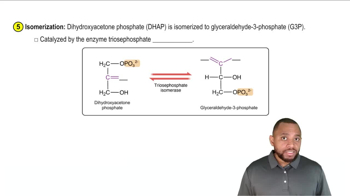
Glycolysis Concept 5

ATP Yield from Fructose

The catabolism of fructose through glycolysis yields a specific amount of ATP. Fructose is phosphorylated and enters the glycolytic pathway, ultimately producing two molecules of pyruvate. Each molecule of pyruvate can generate a net gain of 2 ATP during glycolysis, leading to a total of 4 ATP from one molecule of fructose, considering the initial investment of 2 ATP.
추천 영상:

Muscle Cell Metabolism

Muscle cells have a unique metabolic profile that allows them to efficiently produce ATP during physical activity. They rely heavily on glycolysis for rapid ATP production, especially under anaerobic conditions. This is important for muscle contraction and energy supply during intense exercise, where oxygen availability may be limited.
추천 영상:
가이드 코스
0:50
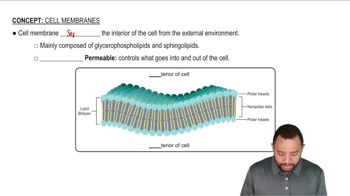
Cell Membranes Concept 1