Ch.11 Introduction to Organic Chemistry: Hydrocarbons
Timberlake - Chemistry: An Introduction to General, Organic, and Biological Chemistry 13th Edition
Timberlake13th EditionChemistry: An Introduction to General, Organic, and Biological ChemistryISBN: 9780134421353당신이 사용하는 게 아니라요?교과서 변경
11장, 문제 7c

Give the IUPAC name for each of the following alkanes and cycloalkanes:
c. Line drawing of a zigzag structure representing a chain of alkanes.

검증된 단계별 안내
1
Identify the parent chain: Look for the longest continuous chain of carbon atoms in the structure. If the structure is a cycloalkane, identify the ring as the parent structure.
Number the carbon atoms in the parent chain or ring: Start numbering from the end or position that gives the substituents the lowest possible numbers.
Identify and name the substituents: Look for any alkyl groups or other substituents attached to the parent chain or ring. Assign a number to each substituent based on its position on the parent chain or ring.
Combine the names: Write the name of the compound by listing the substituents in alphabetical order, followed by the name of the parent chain or ring. Use prefixes like di-, tri-, etc., if there are multiple identical substituents, and separate numbers with commas and numbers from words with hyphens.
Check for any special rules: Ensure that the name follows all IUPAC naming conventions, such as using 'cyclo-' for cyclic structures or ensuring the correct placement of substituents for the lowest numbering.

비슷한 문제에 대한 검증된 영상 답변:

이 영상 해법은 위 문제에 도움이 된다고 튜터들이 추천한 것입니다.

주요 개념

질문에 올바르게 답하기 위해 반드시 이해해야 하는 핵심 개념들은 다음과 같습니다.

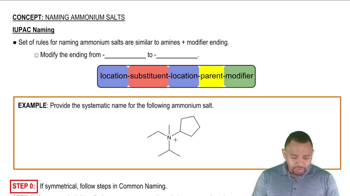
IUPAC Nomenclature

IUPAC nomenclature is a systematic method for naming chemical compounds, particularly organic molecules. It provides rules for naming alkanes and cycloalkanes based on the number of carbon atoms, the presence of branches, and functional groups. Understanding these rules is essential for accurately identifying and communicating the structure of organic compounds.
추천 영상:
가이드 코스
3:18
IUPAC Naming Concept 3

Alkanes

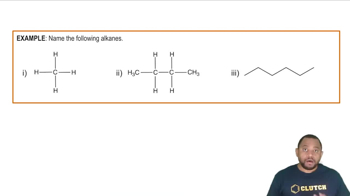
Alkanes are saturated hydrocarbons consisting only of carbon and hydrogen atoms, with single bonds between carbon atoms. They follow the general formula CnH2n+2, where 'n' is the number of carbon atoms. Recognizing the structure and properties of alkanes is crucial for determining their IUPAC names and understanding their chemical behavior.
추천 영상:
가이드 코스
1:20
Naming Alkanes Example 1

Cycloalkanes

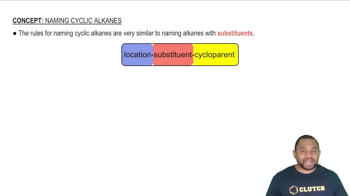
Cycloalkanes are a class of hydrocarbons that contain carbon atoms arranged in a ring structure, with single bonds between them. They follow the general formula CnH2n, which differs from alkanes due to the cyclic nature of their structure. Identifying cycloalkanes and applying the correct nomenclature rules is vital for naming these compounds accurately.
추천 영상:
가이드 코스
0:36
Rules for Naming Cyclic Alkanes Concept 1