Ch.18 Metabolic Pathways and ATP Production
Timberlake - Chemistry: An Introduction to General, Organic, and Biological Chemistry 13th Edition
Timberlake13th EditionChemistry: An Introduction to General, Organic, and Biological ChemistryISBN: 9780134421353당신이 사용하는 게 아니라요?교과서 변경
18장, 문제 3a

Identify each of the following as catabolic or anabolic:
a. synthesis of lipids from glycerol and fatty acids

검증된 단계별 안내
1
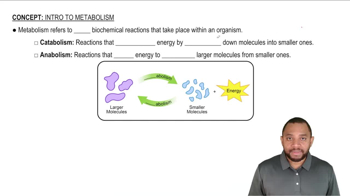
Understand the difference between catabolic and anabolic processes: Catabolic processes involve the breakdown of larger molecules into smaller ones, releasing energy. Anabolic processes involve the synthesis of larger molecules from smaller ones, requiring energy input.
Analyze the given reaction: The synthesis of lipids from glycerol and fatty acids involves combining smaller molecules (glycerol and fatty acids) to form a larger molecule (lipid).
Recognize that synthesis reactions typically fall under anabolic processes because they build complex molecules and require energy.
Consider the biological context: Lipid synthesis is an energy-consuming process that occurs in cells to store energy or create structural components like cell membranes.
Conclude that the synthesis of lipids from glycerol and fatty acids is an anabolic process based on the characteristics of the reaction and its energy requirements.

비슷한 문제에 대한 검증된 영상 답변:

이 영상 해법은 위 문제에 도움이 된다고 튜터들이 추천한 것입니다.
영상 길이:
2m

주요 개념

질문에 올바르게 답하기 위해 반드시 이해해야 하는 핵심 개념들은 다음과 같습니다.

Catabolism

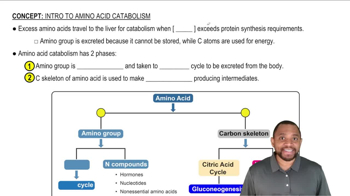
Catabolism refers to the metabolic pathways that break down molecules into smaller units, releasing energy in the process. This energy is often captured in the form of ATP, which cells use for various functions. Catabolic processes include the breakdown of carbohydrates, fats, and proteins to produce energy.
추천 영상:
가이드 코스
2:06
Intro to Amino Acid Catabolism Concept 1

Anabolism

Anabolism is the set of metabolic pathways that construct molecules from smaller units, typically requiring energy input. This process is essential for growth, repair, and maintenance of cells and tissues. Examples of anabolic processes include the synthesis of proteins from amino acids and the formation of lipids from glycerol and fatty acids.
추천 영상:
가이드 코스
1:23
Intro to Metabolism Concept 1

Lipid Synthesis

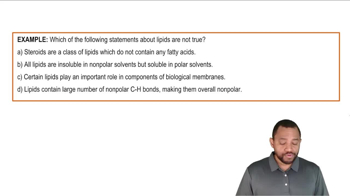
Lipid synthesis is an anabolic process where fatty acids and glycerol are combined to form lipids, such as triglycerides. This process is crucial for storing energy, forming cell membranes, and producing signaling molecules. Understanding lipid synthesis helps in comprehending how the body stores energy and maintains cellular structure.
추천 영상:
가이드 코스
1:28
Intro to Lipids Example 1