Ch.3 Matter and Energy
Timberlake - Chemistry: An Introduction to General, Organic, and Biological Chemistry 13th Edition
Timberlake13th EditionChemistry: An Introduction to General, Organic, and Biological ChemistryISBN: 9780134421353당신이 사용하는 게 아니라요?교과서 변경
3장, 문제 10e

Describe each of the following as a physical or chemical property:
e. Propane gas is compressed to a liquid for placement in a small cylinder.

검증된 단계별 안내
1
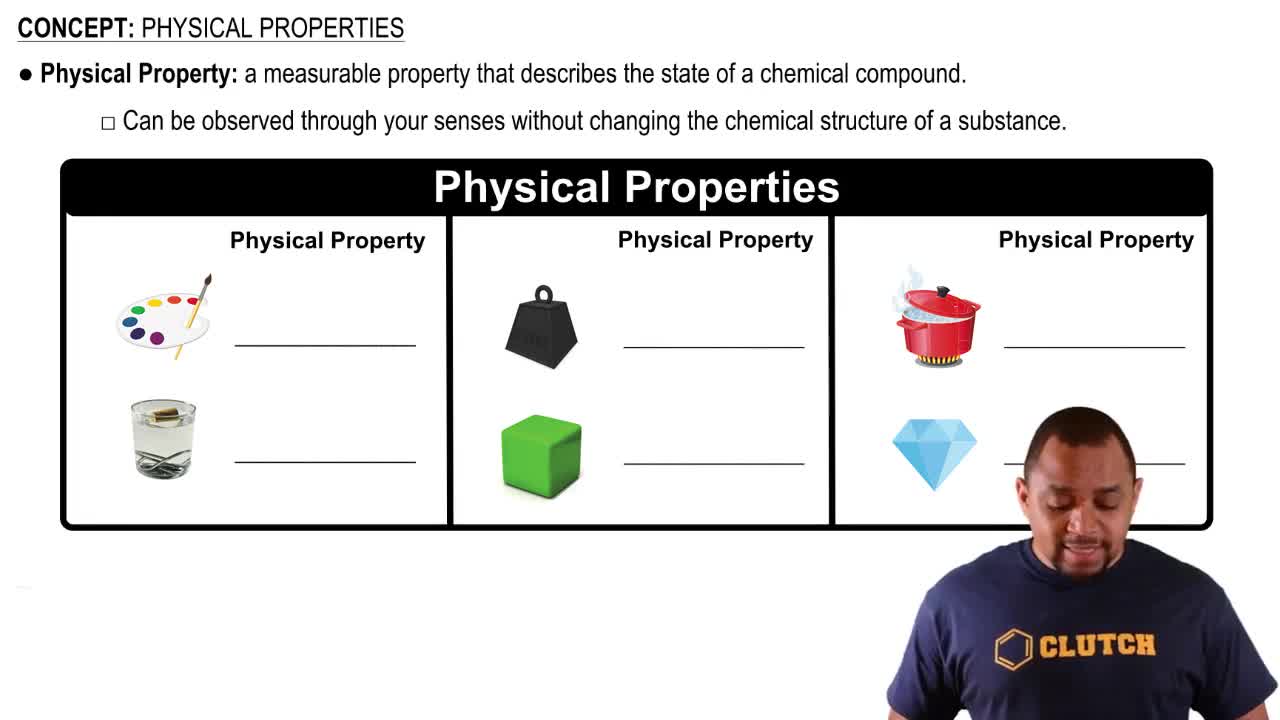
Understand the difference between physical and chemical properties: A physical property is a characteristic of a substance that can be observed or measured without changing its chemical identity (e.g., state, color, density). A chemical property describes a substance's ability to undergo a chemical change, resulting in a new substance (e.g., flammability, reactivity).
Analyze the process described: Propane gas is being compressed into a liquid. This involves a change in the state of matter (from gas to liquid) due to the application of pressure.
Determine whether the chemical identity of propane changes: In this process, the propane remains chemically the same (C₃H₈). There is no chemical reaction or formation of a new substance.
Conclude that the process involves a physical property: Since the change is only in the state of matter and not in the chemical composition, this is a physical property.
Summarize: The compression of propane gas into a liquid for placement in a cylinder is an example of a physical property because it involves a change in state without altering the chemical identity of propane.

비슷한 문제에 대한 검증된 영상 답변:

이 영상 해법은 위 문제에 도움이 된다고 튜터들이 추천한 것입니다.
영상 길이:
42s

주요 개념

질문에 올바르게 답하기 위해 반드시 이해해야 하는 핵심 개념들은 다음과 같습니다.

Physical Property

A physical property is a characteristic of a substance that can be observed or measured without changing its chemical identity. Examples include color, density, melting point, and state of matter. In the context of propane gas being compressed, its ability to change from a gas to a liquid under pressure is a physical property, as it does not alter the chemical structure of propane.
추천 영상:
가이드 코스
02:54
Physical Properties Concept

Chemical Property

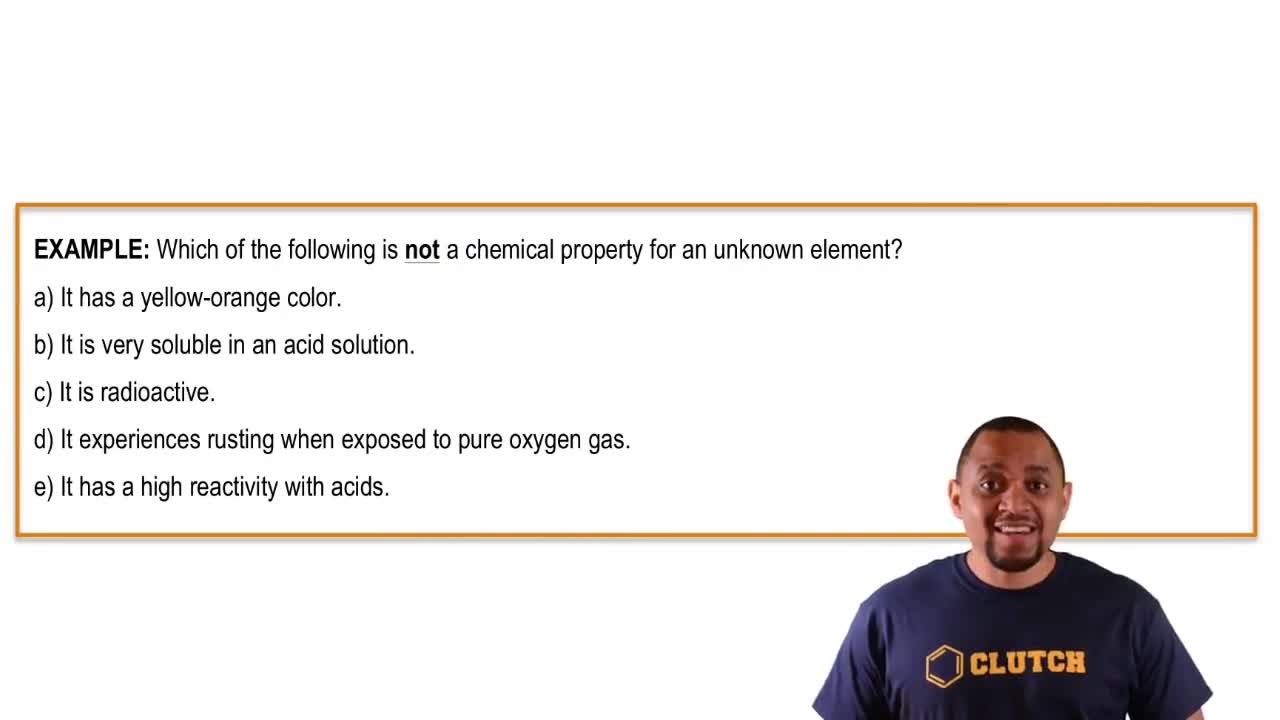
A chemical property describes a substance's ability to undergo a specific chemical change or reaction. This includes reactivity with other chemicals, flammability, and acidity. While compressing propane does not change its chemical properties, understanding its reactivity and combustion characteristics is essential when discussing its use as a fuel.
추천 영상:
가이드 코스
02:11
Chemical Properties Example 1

Phase Change

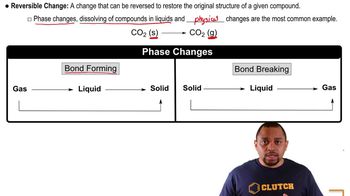
A phase change refers to the transition of a substance from one state of matter to another, such as from gas to liquid. This process involves energy changes and can be influenced by temperature and pressure. In the case of propane, compressing the gas into a liquid involves a phase change that allows it to be stored efficiently in a cylinder, demonstrating the principles of gas behavior under pressure.
추천 영상:
가이드 코스
03:40
Physical & Chemical Changes