Ch.11 Introduction to Organic Chemistry: Hydrocarbons
Timberlake - Chemistry: An Introduction to General, Organic, and Biological Chemistry 14th Edition
Timberlake14th EditionChemistry: An Introduction to General, Organic, and Biological ChemistryISBN: 9781292472249당신이 사용하는 게 아니라요?교과서 변경
11장, 문제 34d

Draw the structural formula for the product in each of the following reactions:
d. Structural formula showing a reaction between an alkene and water, with a proton symbol indicating hydration.

검증된 단계별 안내
1
Identify the type of reaction taking place (e.g., addition, substitution, elimination, etc.) based on the reactants and reaction conditions provided in the image.
Analyze the functional groups present in the reactants and predict how they will interact during the reaction. For example, if there is a double bond, consider whether it will undergo an addition reaction.
Determine the regioselectivity and stereoselectivity of the reaction, if applicable. For instance, in an addition reaction, decide which atom or group will add to which part of the molecule based on Markovnikov's or anti-Markovnikov's rule.
Draw the structural formula of the product by modifying the reactant structure to reflect the changes that occur during the reaction. Ensure that all bonds, atoms, and charges are correctly represented.
Double-check the product structure to confirm that it adheres to the rules of chemical bonding and that all atoms have the correct number of bonds (e.g., carbon has four bonds, hydrogen has one bond).

비슷한 문제에 대한 검증된 영상 답변:

이 영상 해법은 위 문제에 도움이 된다고 튜터들이 추천한 것입니다.

주요 개념

질문에 올바르게 답하기 위해 반드시 이해해야 하는 핵심 개념들은 다음과 같습니다.

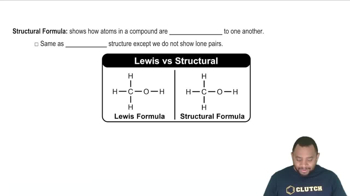
Structural Formula

A structural formula represents the arrangement of atoms within a molecule, showing how they are bonded together. It provides detailed information about the connectivity of atoms, including the types of bonds (single, double, or triple) and the spatial orientation of the atoms. Understanding structural formulas is essential for predicting the reactivity and properties of chemical compounds.
추천 영상:
가이드 코스
1:01
Structural Formula Concept 2

Chemical Reactions

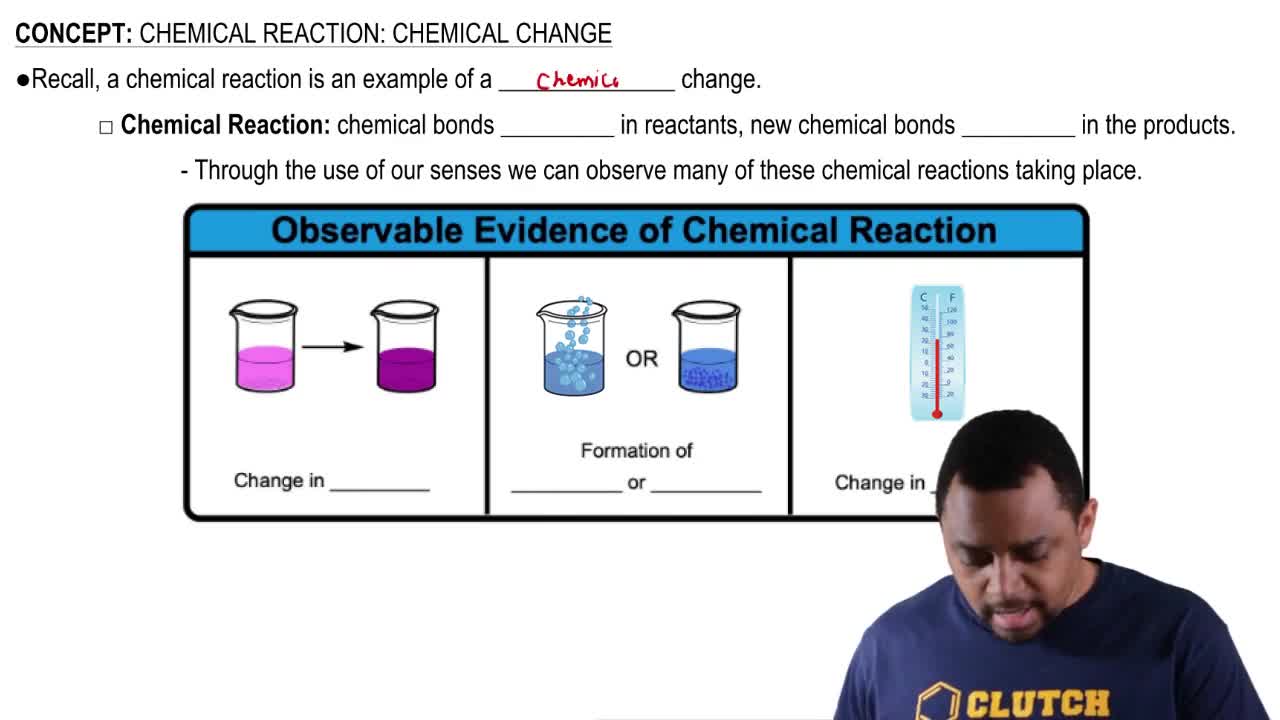
Chemical reactions involve the transformation of reactants into products through the breaking and forming of chemical bonds. Each reaction has specific conditions and mechanisms that dictate how the reactants interact. Familiarity with different types of reactions, such as substitution, addition, or elimination, is crucial for accurately predicting the products formed.
추천 영상:
가이드 코스
00:58
Chemical Reaction: Chemical Change Concept 1

Reaction Mechanism

A reaction mechanism describes the step-by-step process by which reactants are converted into products, detailing the intermediates and transition states involved. Understanding the mechanism helps in predicting the outcome of a reaction and the structural features of the products. It is important for grasping how various factors, such as catalysts or solvents, can influence the reaction pathway.
추천 영상:
가이드 코스
1:30
Alcohol Reactions: Dehydration Reactions Concept 1