Ch.18 Metabolic Pathways and ATP Production
Timberlake - Chemistry: An Introduction to General, Organic, and Biological Chemistry 14th Edition
Timberlake14th EditionChemistry: An Introduction to General, Organic, and Biological ChemistryISBN: 9781292472249당신이 사용하는 게 아니라요?교과서 변경
18장, 문제 95f

 Match the following ATP yields to reactions a to g:
1.5 ATP 2.5 ATP 7 ATP 10 ATP
12 ATP 32 ATP 36 ATP
f. NADH + H+ is oxidized to NAD+.

검증된 단계별 안내
1
Step 1: Understand the context of the problem. The problem involves matching ATP yields to specific reactions. In this case, the reaction provided is the oxidation of NADH + H⁺ to NAD⁺.
Step 2: Recall the biochemical significance of NADH. NADH is a key electron carrier in cellular respiration. When NADH is oxidized to NAD⁺, it donates electrons to the electron transport chain, which drives ATP synthesis.
Step 3: Determine the ATP yield associated with NADH oxidation. In the electron transport chain, the oxidation of one NADH molecule typically results in the production of approximately 2.5 ATP molecules.
Step 4: Match the ATP yield to the reaction. Based on the information above, the reaction 'NADH + H⁺ is oxidized to NAD⁺' corresponds to an ATP yield of 2.5 ATP.
Step 5: Verify the match by considering the broader context of cellular respiration. Ensure that the ATP yield aligns with standard biochemical principles and the role of NADH in energy production.

비슷한 문제에 대한 검증된 영상 답변:

이 영상 해법은 위 문제에 도움이 된다고 튜터들이 추천한 것입니다.
영상 길이:
2m

주요 개념

질문에 올바르게 답하기 위해 반드시 이해해야 하는 핵심 개념들은 다음과 같습니다.

ATP Yield in Cellular Respiration

ATP yield refers to the amount of adenosine triphosphate (ATP) produced during cellular respiration processes, including glycolysis, the citric acid cycle, and oxidative phosphorylation. Each step of these metabolic pathways contributes a specific number of ATP molecules, which are crucial for energy transfer in cells.
추천 영상:

NADH and Its Role in Energy Production

NADH (nicotinamide adenine dinucleotide) is a key electron carrier in cellular respiration. When NADH is oxidized to NAD⁺, it donates electrons to the electron transport chain, leading to the production of ATP through oxidative phosphorylation. The amount of ATP generated from NADH oxidation is significant, typically yielding about 2.5 ATP per molecule.
추천 영상:
가이드 코스
1:08
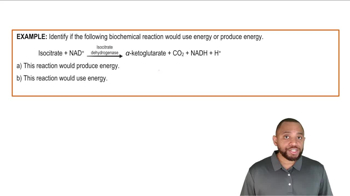
Energy Production In Biochemical Pathways Example 1

Oxidative Phosphorylation

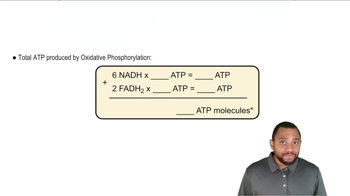
Oxidative phosphorylation is the final stage of cellular respiration, occurring in the mitochondria, where ATP is produced using energy derived from the electron transport chain. This process involves the transfer of electrons from NADH and FADH₂ to oxygen, creating a proton gradient that drives ATP synthesis via ATP synthase, resulting in high ATP yields.
추천 영상:
가이드 코스
0:51
Oxidative Phosphorylation Concept 2