Ch.18 Metabolic Pathways and ATP Production
Timberlake - Chemistry: An Introduction to General, Organic, and Biological Chemistry 14th Edition
Timberlake14th EditionChemistry: An Introduction to General, Organic, and Biological ChemistryISBN: 9781292472249당신이 사용하는 게 아니라요?교과서 변경
18장, 문제 65b

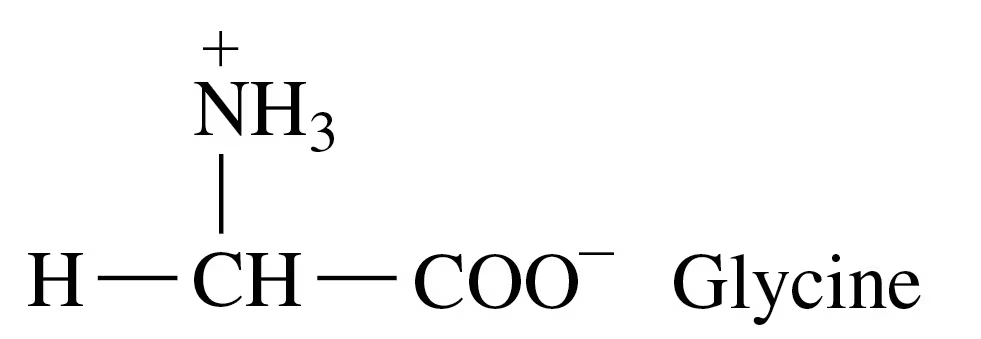
Draw the condensed structural formula for the α-keto acid produced from each of the following in transamination:
a. Condensed structural formula of glycine, showing its amino group, carboxyl group, and hydrogen atom.

검증된 단계별 안내
1
Understand the concept of transamination: Transamination is a biochemical reaction where an amino group from an amino acid is transferred to a keto acid, resulting in the formation of a new amino acid and a new α-keto acid. In this case, we are focusing on the α-keto acid produced.
Identify the structure of the given amino acid: Carefully examine the provided image of the amino acid. Note the positions of the amino group (-NH2), the carboxyl group (-COOH), and the side chain (R group).
Determine the α-keto acid structure: In transamination, the amino group (-NH2) on the α-carbon of the amino acid is replaced by a keto group (=O). This means the α-carbon will now have a double-bonded oxygen instead of the amino group.
Draw the condensed structural formula: Replace the amino group with a keto group in the structure of the amino acid. Ensure that the rest of the molecule, including the side chain (R group) and the carboxyl group, remains unchanged.
Verify the final structure: Double-check the condensed structural formula to ensure it accurately represents the α-keto acid produced from the transamination reaction. Confirm that the α-carbon now has a keto group and that all other parts of the molecule are intact.

비슷한 문제에 대한 검증된 영상 답변:

이 영상 해법은 위 문제에 도움이 된다고 튜터들이 추천한 것입니다.
영상 길이:
3m

주요 개념

질문에 올바르게 답하기 위해 반드시 이해해야 하는 핵심 개념들은 다음과 같습니다.

Transamination

Transamination is a biochemical process where an amino group from an amino acid is transferred to a keto acid, resulting in the formation of a new amino acid and a new keto acid. This reaction is crucial in amino acid metabolism and is catalyzed by enzymes known as transaminases or aminotransferases. Understanding this process is essential for identifying the α-keto acids produced from specific amino acids.
추천 영상:
가이드 코스
3:03
Amino Acid Catabolism: Amino Group Example 2

α-Keto Acid

An α-keto acid is a type of organic compound that contains a carbonyl group (C=O) adjacent to a carboxylic acid group (COOH). These compounds play a significant role in metabolism, particularly in the Krebs cycle and amino acid catabolism. Recognizing the structure and function of α-keto acids is vital for drawing their condensed structural formulas accurately.
추천 영상:

Condensed Structural Formula

A condensed structural formula is a way of representing a chemical compound that shows the arrangement of atoms and the connectivity between them without depicting all the bonds explicitly. This format simplifies the representation of complex molecules, making it easier to visualize their structure. Mastery of drawing condensed structural formulas is important for accurately conveying the molecular structure of the α-keto acids produced in transamination.
추천 영상:
가이드 코스
1:53
Condensed Formula Concept 1