Ch.18 Metabolic Pathways and ATP Production
Timberlake - Chemistry: An Introduction to General, Organic, and Biological Chemistry 14th Edition
Timberlake14th EditionChemistry: An Introduction to General, Organic, and Biological ChemistryISBN: 9781292472249당신이 사용하는 게 아니라요?교과서 변경
18장, 문제 53

How are glycolysis and the citric acid cycle linked to the production of ATP by electron transport?

검증된 단계별 안내
1
Understand that glycolysis and the citric acid cycle are metabolic pathways that break down glucose and other molecules to produce energy intermediates. Glycolysis occurs in the cytoplasm, while the citric acid cycle occurs in the mitochondria.
Recognize that during glycolysis, glucose is converted into pyruvate, producing ATP and NADH. NADH is an electron carrier that plays a crucial role in the electron transport chain.
Learn that in the citric acid cycle, pyruvate is further oxidized to produce carbon dioxide, ATP (or GTP), NADH, and FADH₂. Both NADH and FADH₂ are electron carriers that store high-energy electrons.
Understand that NADH and FADH₂ donate their high-energy electrons to the electron transport chain located in the inner mitochondrial membrane. This chain consists of a series of protein complexes that transfer electrons and pump protons across the membrane.
Recognize that the proton gradient created by the electron transport chain drives ATP synthesis through a process called oxidative phosphorylation. ATP synthase uses the energy from the flow of protons back into the mitochondrial matrix to convert ADP and inorganic phosphate (Pi) into ATP.

비슷한 문제에 대한 검증된 영상 답변:

이 영상 해법은 위 문제에 도움이 된다고 튜터들이 추천한 것입니다.
영상 길이:
2m

주요 개념

질문에 올바르게 답하기 위해 반드시 이해해야 하는 핵심 개념들은 다음과 같습니다.

Glycolysis

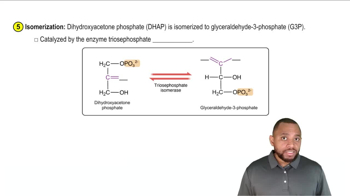
Glycolysis is the metabolic pathway that converts glucose into pyruvate, producing a small amount of ATP and NADH in the process. This occurs in the cytoplasm and is the first step in cellular respiration, providing the necessary substrates for the citric acid cycle. The ATP generated here is crucial for cellular energy, while NADH serves as an electron carrier for subsequent processes.
추천 영상:
가이드 코스
1:26
Glycolysis Concept 5

Citric Acid Cycle

The citric acid cycle, also known as the Krebs cycle, takes place in the mitochondria and processes acetyl-CoA derived from pyruvate. It generates additional NADH and FADH2, which are vital for the electron transport chain. This cycle not only contributes to ATP production but also plays a key role in the metabolism of carbohydrates, fats, and proteins.
추천 영상:
가이드 코스
2:31
Citric Acid Cycle Summary Concept 12

Electron Transport Chain

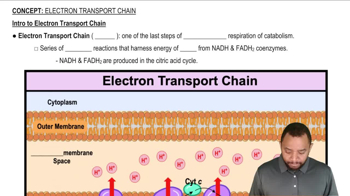
The electron transport chain (ETC) is a series of protein complexes located in the inner mitochondrial membrane that transfer electrons from NADH and FADH2 to oxygen, the final electron acceptor. This process creates a proton gradient that drives ATP synthesis through oxidative phosphorylation. The ETC is essential for maximizing ATP yield from the substrates generated in glycolysis and the citric acid cycle.
추천 영상:
가이드 코스
3:10
Intro to Electron Transport Chain Concept 1