Skip to main content
Macroeconomics
나의 코스
배우기
시험 준비
AI 튜터
학습 가이드
플래시카드
탐험해 보세요
앱을 사용해 보세요
나의 코스
배우기
시험 준비
AI 튜터
학습 가이드
플래시카드
탐험해 보세요
앱을 사용해 보세요
뒤로
Balance of Trade; Trade Deficit and Trade Surplus definitions
카드를 뒤집기 위해 탭할 수 있습니다.
Balance of Trade
카드를 뒤집기 위해 탭할 수 있습니다.
👆
Balance of Trade
Difference between value of goods and services sold abroad and those bought from other countries; reflects net exports.
진행 상황 추적
컨트롤 버튼이 '내비게이션' 모드로 변경되었습니다.
1/14
관련 플래시카드
관련 실천
추천 영상
Balance of Trade; Trade Deficit and Trade Surplus quiz
Balance of Trade; Trade Deficit and Trade Surplus
15 용어
Balance of Trade; Trade Deficit and Trade Surplus
21. Open-Economy Macroeconomics
10 문제점
주제
22. Balance of Payments
5 주제
15 문제점
장
VideoThumbView.guidedCourse
06:55
Trade Deficit and Trade Surplus
248
views
2
rank
이 집합의 용어 (14)
하이드의 정의
Balance of Trade
Difference between value of goods and services sold abroad and those bought from other countries; reflects net exports.
Trade Surplus
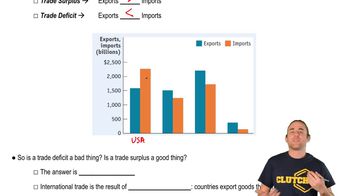
Situation where goods and services sold abroad exceed those purchased from other countries, indicating net positive exports.
Trade Deficit
Condition where goods and services bought from other countries surpass those sold abroad, resulting in negative net exports.
Net Exports
Total value of goods and services sold abroad minus those bought from other countries; can be positive or negative.
Open Economy
System where a country exchanges goods and services with other nations, allowing both imports and exports.
Closed Economy
System where a country does not engage in international exchange of goods and services; no imports or exports.
Exports
Goods and services produced domestically and sold to buyers in other countries, generating income from abroad.
Imports
Goods and services produced abroad and purchased by domestic consumers, reflecting foreign production in local markets.
Comparative Advantage
Ability to produce a good or service at a lower opportunity cost than others, driving international trade patterns.
Savings
Portion of current output not used for immediate consumption, potentially available for future investment or spending.
Investment
Allocation of current resources to activities or assets that increase future productive capacity or output.
Economic Investment
Spending on assets like factories or technology aimed at boosting future production, distinct from financial investments.
Financial Investment
Acquisition of assets such as stocks, bonds, or mutual funds, typically for earning returns rather than increasing output.
Balanced Trade
State where the value of goods and services sold abroad equals those bought from other countries; net exports are zero.
 뒤로뒤로
 06:55
