 뒤로
뒤로Adaptive Immunity and Vaccination Principles
 04:19
04:19
이 집합의 용어 (13)
The four categories are natural active immunity, natural passive immunity, artificial active immunity, and artificial passive immunity.
Natural active and artificial active immunity confer long-term protection because they involve the host producing memory cells after exposure to an antigen.
Vaccine hesitancy is the delay in acceptance or refusal of vaccines despite availability of vaccination services.
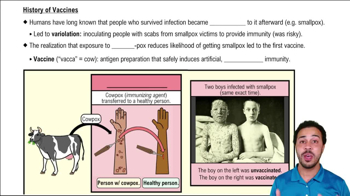
Jenner developed the first successful vaccine using cowpox to protect against smallpox, marking a major advancement from variolation.
Factors include vaccine hesitancy, waning immunity, pathogen mutation, and inadequate vaccination coverage.
Vaccines stimulate the immune system to produce memory cells without causing disease, enabling faster response upon real infection.
Herd immunity occurs when a high percentage of a population is immune, reducing disease spread and protecting non-immunized individuals.
By reducing the number of susceptible hosts, herd immunity lowers the chance of disease transmission to those who are not immune.
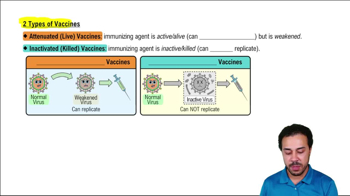
Types include live attenuated, inactivated, subunit, toxoid, DNA, and recombinant vector vaccines.
Live attenuated vaccines use weakened pathogens and induce strong immunity; inactivated vaccines use killed pathogens and often require boosters.
Adjuvants are substances added to vaccines to enhance the immune response to the antigen.
DNA vaccines deliver genetic material encoding an antigen, leading host cells to produce the antigen and stimulate an immune response.
Recombinant vector vaccines use a harmless virus or bacterium to deliver genes encoding antigens to stimulate immunity.