 뒤로
뒤로Innate Immunity and Host Defenses in Microbiology
 05:52
05:52
이 집합의 용어 (20)
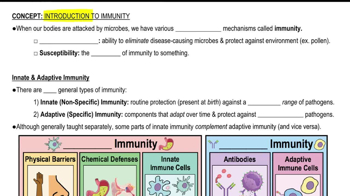
Innate immunity is the body's nonspecific defense against any pathogen, present at birth and rapid in response.
Adaptive immunity targets specific pathogens, responds slower than innate immunity, and has a memory component.
TLRs on host cells recognize pathogen-associated molecular patterns (PAMPs) and trigger cytokine release to regulate immune responses.
Examples include LPS, flagellin, peptidoglycan, bacterial DNA, and viral DNA/RNA.
Skin with keratin, mucous membranes, lacrimal apparatus, ciliary escalator, epiglottis, earwax, urine flow, vaginal secretions, and mechanisms like peristalsis and vomiting.
The epidermis has tightly packed epithelial cells with keratin; shedding and dryness inhibit microbial growth, making it a strong barrier.
Mucus traps microbes and prevents drying of the gastrointestinal, respiratory, and genitourinary tracts.
It drains tears to wash the eye, helping remove microbes and debris.
Sebum lowers skin pH; lysozyme in tears and saliva destroys bacterial walls; low pH of gastric juice and vaginal secretions inhibits microbes.
Competition by normal microbiota against pathogens for space and nutrients, producing substances harmful to pathogens and altering conditions to prevent pathogen survival.
Commensalism is a relationship where one organism benefits and the host is unharmed.
Normal microbiota that can cause disease if the host's defenses are compromised, e.g., E. coli, S. aureus, Pseudomonas aeruginosa.
Probiotics are live beneficial microbes administered to improve health; prebiotics are nutrients that promote growth of beneficial bacteria.
They include erythrocytes (red blood cells), leukocytes (white blood cells), and platelets.
The process of blood cell formation from stem cells in red bone marrow.
Neutrophils: phagocytize bacteria and fungi; basophils: release histamine in allergies; eosinophils: kill parasites and helminths.
Monocytes: mature into macrophages for phagocytosis; dendritic cells: phagocytize and present antigens; lymphocytes: T cells, B cells, and NK cells involved in adaptive immunity.
NK cells kill cancer cells and virus-infected cells without prior sensitization.
It includes lymph plasma, lymphatic vessels, lymphoid tissues and organs, and red bone marrow.
Lymph carries microbes to lymph nodes where immune cells like B and T lymphocytes, macrophages, and dendritic cells destroy pathogens.