 뒤로
뒤로Microbial Growth and Control in Microbiology
 02:16
02:16
이 집합의 용어 (24)
Microbial growth is an increase in the number of cells, not just cell size, through cell division producing daughter cells.
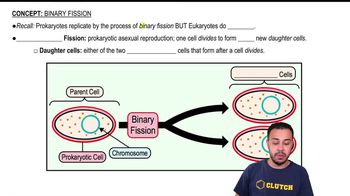
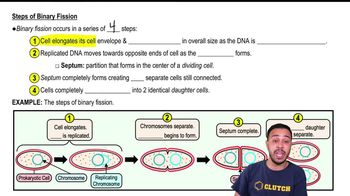
Binary fission is an asexual process in most prokaryotes where a single cell divides into two genetically identical cells.
Budding is a form of asexual reproduction where a small outgrowth forms on a cell, receives a duplicated chromosome, and separates from the mother cell.
Biofilms form when planktonic bacteria adhere to surfaces, produce a sticky polysaccharide matrix, and develop into a mixed microbial community with nutrient channels.
Generation time is the time it takes for a microbial population to double by cell division, varying by species and conditions.
1) Lag phase: adjustment, no growth
2) Log phase: exponential growth
3) Stationary phase: growth rate equals death rate
4) Death phase: exponential cell death
A chemostat maintains constant bacterial growth by continuously adding fresh medium and removing waste and excess cells.
Psychrophiles thrive at −20°C to 10°C; psychrotrophs grow at 0–30°C and are linked to foodborne illness.
Mesophiles grow best at 10°–50°C and include most human pathogens.
Acidophiles grow below pH 5; alkaliphiles grow in pH 9–11 environments.
Halophiles require high salt concentrations; facultative halophiles tolerate but do not require high salt.
Microbes can be obligate aerobes, obligate anaerobes, facultative anaerobes, aerotolerant anaerobes, or microaerophiles based on oxygen use and tolerance.
Superoxide dismutase converts superoxide ions to hydrogen peroxide; catalase converts hydrogen peroxide to water and oxygen.
Growth factors are essential substances a microbe cannot synthesize and must obtain from the environment to grow.
Heterotrophs require organic carbon sources; autotrophs fix CO2 to produce organic carbon.
Selective media encourage growth of certain bacteria while suppressing others, aiding isolation.
Differential media allow visual distinction of microbes based on metabolic differences, e.g., blood agar hemolysis types.
Samples are serially diluted and plated; colonies formed are counted to estimate living cell numbers (CFU).
HEPA filters remove 99.97% of airborne particles ≥0.3 µm, including microbes and allergens.
Standard autoclaving uses steam at 121°C and 15 psi for at least 15 minutes to sterilize materials.
Sterilization eliminates all microbes including endospores; disinfection reduces microbial numbers but may not kill spores.
Disinfectants treat inanimate objects; antiseptics are applied to living tissue to reduce microbes.
Alcohol denatures proteins and disrupts cell membranes, killing many microbes.
Biofilms have a protective matrix, slow-growing cells, and persister cells, making them harder to kill than planktonic cells.