Skip to main content
Microbiology
나의 코스
배우기
시험 준비
AI 튜터
학습 가이드
교과서적 해결책
플래시카드
탐험해 보세요
앱을 사용해 보세요
나의 코스
배우기
시험 준비
AI 튜터
학습 가이드
교과서적 해결책
플래시카드
탐험해 보세요
앱을 사용해 보세요
뒤로
Microbiology: Biochemistry Basics
카드를 뒤집기 위해 탭할 수 있습니다.
What are atoms?
카드를 뒤집기 위해 탭할 수 있습니다.
👆
What are atoms?
Atoms are the smallest units of elements, which are pure substances that make up ordinary matter.
진행 상황 추적
컨트롤 버튼이 '내비게이션' 모드로 변경되었습니다.
1/28
추천 영상
02:13
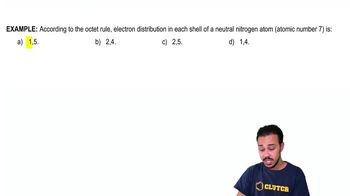
Atoms- Smallest Unit of Matter Example 1
30399
views
792
rank
03:51
Atoms- Smallest Unit of Matter Example 3
19783
views
424
rank
09:44
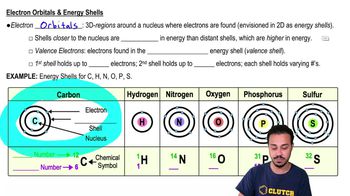
Electron Orbitals & Energy Shells
27525
views
588
rank
이 집합의 용어 (28)
하이드의 정의
What are atoms?
Atoms are the smallest units of elements, which are pure substances that make up ordinary matter.
What particles are found in the atomic nucleus?
The atomic nucleus contains protons (positively charged) and neutrons (neutral). Electrons (negatively charged) orbit around the nucleus.
What defines an element's atomic number?
The atomic number is the number of protons in an atom and is unique to each element.
What is the difference between an anion and a cation?
Cations are positively charged ions formed by losing electrons; anions are negatively charged ions formed by gaining electrons.
What are isotopes?
Isotopes are atoms of the same element with the same number of protons but different numbers of neutrons.
Define molecule, compound, and isomer.
A molecule is two or more atoms bonded; a compound is a molecule with different elements; isomers have the same formula but different structures.
How do you write molecular formulas for carbon-containing molecules?
List carbon (C) first, then hydrogen (H), followed by other elements in alphabetical order.
What distinguishes organic from inorganic compounds?
Organic compounds contain carbon and hydrogen; inorganic compounds may contain carbon but lack associated hydrogen.
What is the pH scale and what does it measure?
The pH scale measures acidity or basicity of a solution, ranging from 0 (acidic) to 14 (basic), with 7 being neutral.
What happens to pH when acids or bases are added to a solution?
Adding acid decreases pH; adding base increases pH.
What are buffers and why are they important?
Buffers stabilize pH by absorbing or releasing hydrogen ions, maintaining biological system balance.
What are valence electrons and their role in bonding?
Valence electrons are electrons in the outer shell that participate in chemical bonding.
Describe ionic bonds.
Ionic bonds form by transfer of electrons between atoms, creating oppositely charged ions attracted electrostatically.
What are electrolytes?
Electrolytes are free ions in solution that conduct electricity, formed when ionic compounds dissolve.
Describe covalent bonds.
Covalent bonds involve sharing one or more pairs of electrons between atoms.
What are polar covalent bonds?
Polar covalent bonds result from unequal sharing of electrons, creating partial positive and negative charges (dipoles).
What are hydrogen bonds?
Hydrogen bonds are noncovalent electrostatic attractions between molecules or within large molecules.
What are van der Waals interactions?
Weak attractions from temporary dipoles in molecules that stabilize molecular structures when combined.
Define hydrophilic, hydrophobic, and amphipathic molecules.
Hydrophilic molecules dissolve in water; hydrophobic do not; amphipathic have both properties.
What are the four main classes of biomolecules?
Carbohydrates, lipids, nucleic acids, and proteins.
What are glycosidic, peptide, and phosphodiester bonds?
Glycosidic bonds link sugars; peptide bonds link amino acids; phosphodiester bonds link nucleotides.
What are monosaccharides, disaccharides, and polysaccharides?
Monosaccharides are single sugars; disaccharides are two linked sugars; polysaccharides are long sugar chains.
What is the difference between saturated and unsaturated lipids?
Saturated lipids have no double bonds and pack tightly; unsaturated lipids have one or more double bonds causing kinks.
What are the building blocks of nucleic acids?
Nucleotides composed of a five-carbon sugar, phosphate groups, and nitrogenous bases.
What distinguishes DNA from RNA nucleotides?
DNA contains deoxyribose sugar and thymine; RNA contains ribose sugar and uracil.
What are the four levels of protein structure?
Primary (amino acid sequence), secondary (alpha-helices and beta-sheets), tertiary (3D folding), quaternary (multiple polypeptides).
What role do chaperone proteins play?
Chaperones assist in proper protein folding, preventing misfolding and aggregation.
What are the main functions of proteins?
Proteins serve as enzymes, structural components, transporters, cell recognition, and communication molecules.
 뒤로뒤로
뒤로뒤로
 02:13
02:13