 뒤로
뒤로Microbiology: Gene Expression, Operons, and Mutations
 05:45
05:45
이 집합의 용어 (20)
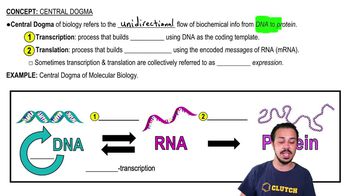
Gene expression is the process that determines if a gene is turned on or off, leading to the production of proteins or RNA.
An operon is a group of genes transcribed together under the control of a single promoter and operator, allowing coordinated gene regulation.
The main parts are the promoter (where RNA polymerase binds), the operator (controls transcription), and the structural genes (code for proteins).
The regulatory gene produces a repressor protein that can bind to the operator to block transcription or be inactivated to allow transcription.
Gene expression can be constitutive (always on), inducible (turned on as needed), or repressible (turned off as needed).
The lac operon contains three structural genes: lacZ, lacY, and lacA, which code for enzymes involved in lactose metabolism.
To conserve energy by only producing lactose-digesting enzymes when lactose is present, preventing unnecessary protein synthesis.
In an inducible operon, the repressor is active by default and blocks transcription until an inducer molecule binds the repressor, inactivating it and allowing gene expression.
Allolactose, a metabolite of lactose, acts as the inducer by binding to the repressor and preventing it from blocking transcription.
In a repressible operon, genes are normally on, but when a corepressor molecule binds the repressor protein, it activates the repressor to block transcription.
Tryptophan acts as the corepressor by binding to the repressor protein, activating it to stop tryptophan synthesis when levels are sufficient.
Epigenetic control involves methylation of nucleotides, mainly adenine, which turns genes off without changing the DNA sequence and can be inherited by daughter cells.
Regulation after transcription, such as riboswitches that change mRNA structure to start or stop translation, or microRNAs that degrade mRNA to prevent protein production.
A mutation is a permanent change in the DNA base sequence that can be neutral, beneficial, or harmful.
A point mutation is a single base substitution in DNA, which can be silent, missense, or nonsense.
Mutagens are environmental agents that cause mutations, including chemical agents like nitrous acid and nucleoside analogs, and physical agents like ionizing and non-ionizing radiation.
Ionizing radiation (X-rays, gamma rays) forms ions that oxidize nucleotides and break DNA strands, causing mutations.
UV radiation causes thymine dimers, which distort DNA and block replication; these can be repaired by photolyases or nucleotide excision repair enzymes.
The Ames test detects mutagenic potential of substances by measuring the rate of mutation reversal in bacteria exposed to the substance.
Genetic variation allows populations to adapt to changing environments and survive selective pressures like antibiotics.