 뒤로
뒤로Microbiology Key Concepts from Microbiology with Diseases by Taxonomy (6th Edition)
 03:36
03:36

이 집합의 용어 (28)
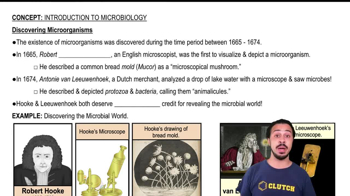
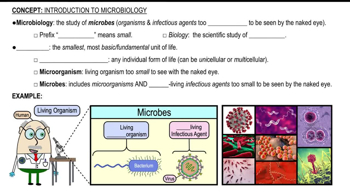
Microbiology is the study of microorganisms, including bacteria, viruses, fungi, protozoa, and algae.
Bacteria, viruses, fungi, protozoa, and algae.
Prokaryotes are unicellular organisms that lack a membrane-bound nucleus and organelles, such as bacteria and archaea.
Eukaryotes are organisms with cells that contain a membrane-bound nucleus and organelles, including fungi, protozoa, and algae.
Bacterial cell walls provide shape, protection, and prevent osmotic lysis.
Peptidoglycan is a polymer of sugars and amino acids forming the bacterial cell wall, providing rigidity.
Gram-positive have thick peptidoglycan layers; Gram-negative have thin peptidoglycan and an outer membrane with lipopolysaccharides.
The Gram stain differentiates bacteria into Gram-positive or Gram-negative based on cell wall structure.
Flagella provide motility to bacteria, allowing movement toward or away from stimuli.
Binary fission is the asexual reproduction process where a bacterial cell divides into two identical daughter cells.
Endospores are dormant, resistant structures formed by some bacteria to survive harsh conditions.
Information flows from DNA to RNA to protein.
Ribosomes synthesize proteins by translating mRNA.
Viruses are acellular, require host cells to replicate, and contain DNA or RNA; bacteria are cellular, living organisms.
The capsid is the protein coat that encloses the viral genome.
The lytic cycle is a viral replication process resulting in host cell lysis and release of new viruses.
The lysogenic cycle involves viral DNA integrating into the host genome, replicating with it without immediate lysis.
Fungi are eukaryotic organisms that absorb nutrients from organic material; they include yeasts and molds.
Protozoa are unicellular eukaryotes, often motile, that can be free-living or parasitic.
Microbial taxonomy is the classification, identification, and naming of microorganisms.
16S rRNA gene sequencing is used to identify and classify bacteria based on conserved genetic sequences.
An organism that cannot survive in the presence of oxygen.
An organism that requires oxygen for growth.
An organism that can grow with or without oxygen.
Plasmids are small, circular DNA molecules that carry genes beneficial for survival, such as antibiotic resistance.
Quorum sensing is bacterial communication that regulates gene expression based on population density.
Biofilms are communities of microorganisms attached to surfaces, protected by a self-produced matrix.
Sterilization destroys all forms of microbial life; disinfection reduces harmful microorganisms but may not kill all spores.