 뒤로
뒤로Microbiology Study Guide: Bacterial Growth, Media, Biochemical Tests, and Oxygen
 07:16
07:16

이 집합의 용어 (28)
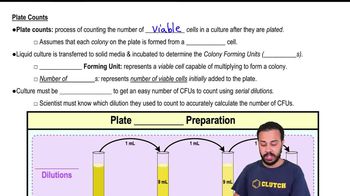
Serial dilution reduces bacterial concentration stepwise; plate counts estimate viable bacteria capable of forming colonies.
Pour plate: diluted sample mixed with molten agar; colonies grow within and on agar.
Spread plate: sample spread on agar surface; colonies grow only on surface.
A statistical method estimating microorganism numbers, commonly detecting fecal coliforms by lactose fermentation and gas production.
1. Biomass measurement (wet or dry weight)
2. Turbidity via spectrophotometer
3. Measuring cellular chemical constituents or metabolic products
Media with incompletely known chemical composition, providing nutrients from complex ingredients for general bacterial growth.
Media with exact known chemical composition and concentrations, used to control or manipulate chemical variables in experiments.
Contain substances that inhibit some microorganisms while allowing others to grow, helping isolate particular bacterial groups.
Contain indicators that reveal biochemical differences among microorganisms growing on the same medium.
Media supplemented with extra nutrients to support fastidious or nutritionally demanding organisms.
MacConkey agar selects for Gram-negative bacteria and differentiates them by lactose fermentation.
Broth (liquid), agar slant (solid slanted surface), agar deep (solid in deep tube), and agar plate (solid in Petri dish).
Single-test media determine one principal result; multiple-test media allow multiple biochemical results from one medium.
Through bacterial enzyme activity causing color changes, precipitates, bubbles, or other visible changes using indicators and reagents.
Whether bacteria metabolize carbohydrates producing acids and/or gas as end products.
Removal of a carboxyl group from an amino acid; indicates presence of specific decarboxylase enzymes in bacteria.
Detects catalase enzyme by adding hydrogen peroxide to bacteria; bubbles indicate catalase-positive, no bubbles indicate catalase-negative.
Staphylococci are catalase-positive; Streptococci are catalase-negative.
Neutralizes superoxide radicals by converting them into hydrogen peroxide and oxygen.
Break down hydrogen peroxide and other peroxides, protecting cells from oxidative damage.
Presence of cytochrome c oxidase enzyme, indicating certain aerobic respiratory pathways.
Psychrophiles: cold-loving bacteria growing best at low temperatures.
Psychrotrophs: cold-tolerant bacteria that can grow in refrigerators and room temperature.
Can grow at refrigerator temperatures (~4–5°C), causing listeriosis, a serious invasive disease.
Bacteria that survive high temperatures without necessarily growing best at them; may survive pasteurization.
Thermophiles: grow best at high temperatures.
Thermoduric: survive high temperatures but do not necessarily grow best there.
Introduction of microorganisms into growth media using aseptic technique to prevent contamination.
Streaking a plate in successive quadrants to dilute bacteria and obtain isolated colonies.
Inoculating needle for stabbing agar deeps; inoculating loop for streaking agar slants.
To avoid damaging the medium and to follow specified inoculation depth for accurate test results.