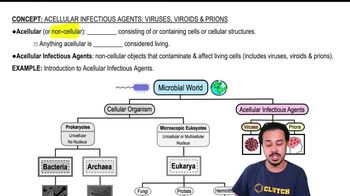
Virus is a minuscule, acellular infectious agent containing either DNA or RNA that causes infections in humans, animals, plants, and bacteria.
Are viruses considered alive?
Viruses are debated as either complex pathogenic chemicals or the least complex living entities because they invade cells, control host machinery, and replicate.
What is a virion?
A virion is the extracellular state of a virus, consisting of a protein coat (capsid) surrounding nucleic acid, sometimes with a phospholipid envelope.
What types of genetic material do viruses have?
Viruses have DNA or RNA genomes, never both, which can be double-stranded or single-stranded (dsDNA, ssDNA, dsRNA, ssRNA).
How specific are viruses to their hosts?
Most viruses infect specific host cells, sometimes only particular cell types, while generalist viruses infect many cell types across hosts.
What are the three basic viral capsid shapes?
The three basic viral capsid shapes are helical, polyhedral, and complex.
What is the viral envelope and its role?
The viral envelope is acquired from the host membrane during replication and contains proteins and glycoproteins important for host recognition.
On what basis are viruses classified?
Viruses are classified by nucleic acid type, presence of envelope, shape, and size.
What is the lytic replication cycle?
The lytic cycle involves attachment, entry, synthesis, assembly, and release, usually resulting in host cell death and lysis.
What is lysogeny in bacteriophages?
Lysogeny is a modified replication where the phage genome integrates into the host chromosome, allowing host cell reproduction without lysis.
How do animal viruses differ in replication from bacteriophages?
Animal viruses replicate similarly but differ due to envelopes, eukaryotic hosts, and lack of cell walls; attachment uses glycoprotein spikes.
What are the three main ways viruses enter animal cells?
Viruses enter by direct penetration, membrane fusion, or endocytosis.
What is viral latency?
Latency is when animal viruses remain dormant in host cells, sometimes permanently integrating as proviruses.
How can viruses contribute to cancer?
Viruses can induce mutations that disrupt cell division control, leading to neoplasia and tumor formation.
Name some cancers caused by viruses.
Viruses cause cancers like Burkitt’s lymphoma, Hodgkin’s disease, Kaposi’s sarcoma, cervical cancer, and liver cancer.
What are viroids?
Viroids are extremely small, circular RNA molecules that infect plants and lack a protein capsid.
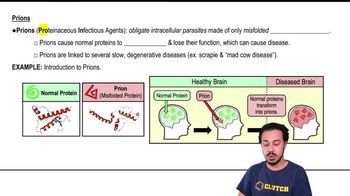
What are prions?
Prions are misfolded proteinaceous infectious agents that corrupt normal proteins and cause fatal neurodegenerative diseases.
How are prion diseases characterized?
Prion diseases cause brain degeneration with spongy appearance, fibril deposits, and large vacuoles; they resist normal sterilization.
How are viruses cultured in the lab?
Viruses are cultured in bacteria, plants, animals, embryonated chicken eggs, or cell (tissue) cultures.
What are diploid and continuous cell cultures?
Diploid cultures come from normal cells and have limited lifespan; continuous cultures derive from tumor cells and grow indefinitely.
 뒤로
뒤로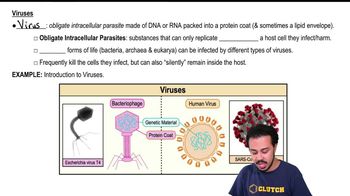
 03:22
03:22