 뒤로
뒤로Types of Vaccine Formulations in Microbiology
 04:19
04:19
이 집합의 용어 (20)
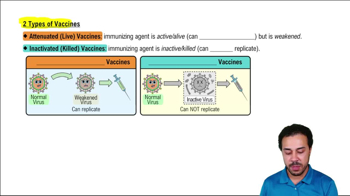
Live attenuated vaccines use weakened forms of the pathogen that can still replicate but do not cause disease in healthy individuals.
Vector vaccines use a harmless virus or bacterium to deliver genetic material from the pathogen to stimulate immunity.
Whole-agent inactivated vaccines contain pathogens that have been killed or inactivated so they cannot replicate but still provoke an immune response.
Subunit vaccines include only specific parts of the pathogen, such as proteins or polysaccharides, to trigger immunity without using whole pathogens.
Purified subunit vaccines contain isolated proteins or antigens from the pathogen to safely induce immunity.
Toxoid vaccines use inactivated toxins produced by bacteria to stimulate immunity against the toxin rather than the bacteria itself.
Conjugate vaccines link polysaccharide antigens to proteins to improve immune response, especially in young children.
DNA/RNA vaccines deliver genetic instructions for the host cells to produce pathogen antigens, eliciting an immune response.
Live attenuated vaccines replicate in the host and induce strong immunity; inactivated vaccines cannot replicate and often require boosters.
They induce strong, long-lasting immunity and often provide herd immunity by spreading to contacts.
Risk of reversion to virulence and not suitable for immunocompromised individuals.
Stable, safe for immunocompromised, and no risk of causing disease.
Weaker immune response and often require multiple doses or adjuvants.
To enhance immune response to polysaccharide antigens by linking them to a protein carrier.
They use a harmless vector to deliver pathogen genes, prompting host cells to produce antigens and stimulate immunity.
To protect against diseases caused by bacterial toxins rather than the bacteria themselves.
They instruct host cells to produce antigen proteins, triggering both humoral and cellular immune responses.
Subunit vaccines are safer as they contain no live components and cannot cause infection.
They cannot replicate and often require adjuvants to enhance immune response.
Measles, mumps, rubella (MMR) and varicella vaccines are common live attenuated vaccines.