Label on the figure the following processes that result in phagocytosis: margination, diapedesis, adherence, and phagolysosome formation.
Ch. 16 - Innate Immunity: Nonspecific Defenses of the Host

12장, 문제 8
Helicobacter pylori uses the enzyme urease to counteract a chemical defense in the human organ in which it lives. This chemical defense is
a. lysozyme.
b. hydrochloric acid.
c. superoxide radicals.
d. sebum.
e. complement.
검증된 단계별 안내1
Step 1: Understand the habitat of Helicobacter pylori, which is the human stomach, an environment known for its highly acidic conditions.
Step 2: Recognize that Helicobacter pylori produces the enzyme urease, which catalyzes the hydrolysis of urea into ammonia and carbon dioxide.
Step 3: Connect the production of ammonia by urease to its role in neutralizing the acidic environment, thereby protecting the bacteria from stomach acid.
Step 4: Identify the chemical defense in the stomach that urease helps to counteract, which is the acidic pH primarily due to hydrochloric acid.
Step 5: Review the answer choices and select the one that corresponds to the stomach's chemical defense neutralized by urease, which is hydrochloric acid.

비슷한 문제에 대한 검증된 영상 답변:
이 영상 해법은 위 문제에 도움이 된다고 튜터들이 추천한 것입니다.
영상 길이:
1m주요 개념
질문에 올바르게 답하기 위해 반드시 이해해야 하는 핵심 개념들은 다음과 같습니다.
Helicobacter pylori and its survival mechanism
Helicobacter pylori is a bacterium that colonizes the human stomach, an acidic environment hostile to most microbes. It produces the enzyme urease, which breaks down urea into ammonia and carbon dioxide, helping neutralize stomach acid and protect the bacterium from acidic damage.
추천 영상:
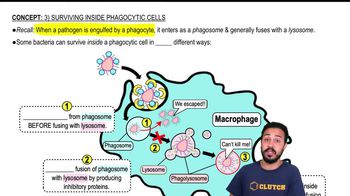
Surviving Inside Phagocytic Cells
Role of urease enzyme
Urease catalyzes the hydrolysis of urea into ammonia and carbon dioxide. The ammonia raises the local pH around H. pylori, neutralizing the stomach's hydrochloric acid and allowing the bacterium to survive and colonize the gastric mucosa.
추천 영상:
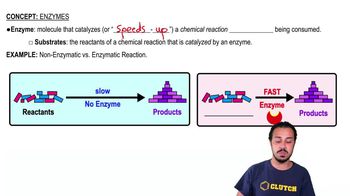
Enzymes
Chemical defenses of the stomach
The stomach defends against pathogens primarily through hydrochloric acid, which creates a highly acidic environment (pH ~1-2) that kills many microbes. Other defenses include enzymes and immune factors, but hydrochloric acid is the main chemical barrier targeted by H. pylori.
추천 영상:

Chemical Defenses: Gastric Juice Prevents Microbial Growth by Lowering pH
관련 실천
교과서 질문
1397
views
교과서 질문
Are the following involved in innate or in adaptive immunity? Identify the role of each in immunity:
a. TLRs
b. transferrins
c. antimicrobial peptides
1434
views
교과서 질문
Which of the following does not stimulate phagocytes?
a. Cytokines
b. IFN-y
c. C3b
d. Lipid A
e. Histamine
1439
views
교과서 질문
Give several examples of how microbes evade the complement system.
1718
views
교과서 질문
In 1884, Elie Metchnikoff observed cells collected around a splinter inserted in a sea star embryo. This was the discovery of
a. blood cells.
b. sea stars.
c. phagocytosis.
d. immunity.
e. none of the above
1438
views
교과서 질문
Which of the following statements about IFN-α is false?
a. It interferes with viral replication.
b. It is host-cell–specific.
c. It is released by fibroblasts.
d. It is virus-specific.
e. It is released by lymphocytes.
1630
views