Ch. 21 - Microbial Diseases of the Skin and Eyes
Tortora - Microbiology: An Introduction 14th Edition
Tortora14th EditionMicrobiology: An IntroductionISBN: 9780138200398당신이 사용하는 게 아니라요?교과서 변경
17장, 문제 7

Use the following choices to answer the question given below.
a. Pseudomonas
b. Staphylococcus aureus
c. Scabies
d. Sporothrix
e. Virus
Nothing is seen in microscopic examination of a scraping from the patient’s rash.

검증된 단계별 안내
1
Step 1: Understand the context of the problem, which involves identifying the likely cause of a rash when microscopic examination of a skin scraping shows no visible organisms.
Step 2: Review the given options: a. Pseudomonas (a bacterium), b. Staphylococcus aureus (a bacterium), c. scabies (a parasitic mite), d. Sporothrix (a fungus), e. virus (a non-cellular infectious agent).
Step 3: Recall that microscopic examination of a scraping typically reveals bacteria, fungi, or parasites if present in sufficient numbers, but viruses are too small to be seen under a light microscope without special staining or culture techniques.
Step 4: Consider that scabies mites are usually visible under the microscope in skin scrapings, as are fungal elements like Sporothrix, and bacteria like Pseudomonas or Staphylococcus aureus can often be detected or cultured.
Step 5: Conclude that if nothing is seen in the microscopic examination, the most likely cause is a virus, since viruses cannot be directly visualized by standard light microscopy in skin scrapings.

비슷한 문제에 대한 검증된 영상 답변:

이 영상 해법은 위 문제에 도움이 된다고 튜터들이 추천한 것입니다.
영상 길이:
3m

주요 개념

질문에 올바르게 답하기 위해 반드시 이해해야 하는 핵심 개념들은 다음과 같습니다.

Microscopic Examination in Microbiology

Microscopic examination involves observing samples under a microscope to detect microorganisms like bacteria, fungi, or parasites. If nothing is seen, it may indicate the pathogen is too small, not present in the sample, or requires special staining techniques. Understanding the limitations of microscopy helps in interpreting negative results.
추천 영상:
03:46
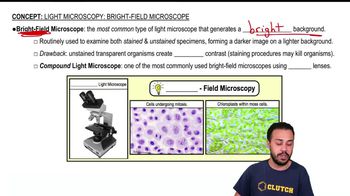
Light Microscopy: Bright-Field Microscopes

Characteristics of Common Pathogens

Different pathogens have distinct features; for example, bacteria like Staphylococcus aureus are visible under light microscopy, fungi like Sporothrix can be seen with special stains, while viruses are too small to be seen with standard microscopes. Recognizing these traits aids in identifying the likely cause of infection.
추천 영상:
03:40
Introduction to Pathogenic Toxins

Diagnostic Challenges of Viral and Parasitic Infections

Viruses and some parasites, such as scabies mites, may not be visible in routine microscopic exams of skin scrapings. Viruses require molecular or culture methods for detection, and scabies mites may be missed if sampling is inadequate. Awareness of these challenges guides appropriate diagnostic approaches.
추천 영상:
05:12
Persistent Viral Infections