 뒤로
Microeconomics Key Concepts and Models
 01:42


이 집합의 용어 (25)
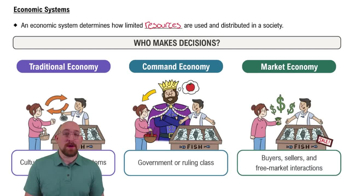
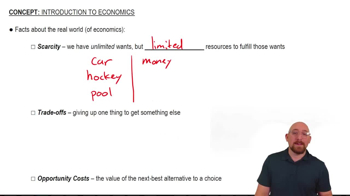
Economics is the study of how individuals and societies allocate scarce resources to satisfy unlimited wants.
Microeconomics focuses on individual markets and agents; Macroeconomics studies the economy as a whole.
Scarcity refers to the limited nature of resources available to meet unlimited wants.
Opportunity cost is the value of the next best alternative foregone when making a choice.
Positive economics is objective and fact-based; Normative economics is subjective and value-based.
Rational decision-making based on weighing costs and benefits.
What to produce? How to produce? For whom to produce?
The PPF shows the maximum combinations of goods that can be produced given resources and technology.
As production increases, the cost of producing additional units rises.
Comparative advantage is producing at lower opportunity cost; absolute advantage is producing more with the same resources.
As price decreases, quantity demanded increases (inverse relationship).
As price increases, quantity supplied increases (direct relationship).
Occurs where supply equals demand, determining equilibrium price and quantity.
Measures responsiveness of quantity demanded to changes in price.
Measures how demand for one good responds to price changes of another good.
Difference between what consumers are willing to pay and what they actually pay.
Difference between the price producers receive and the minimum price they are willing to accept.
Loss of total surplus due to market inefficiency.
Costs or benefits affecting third parties; can be positive or negative.
Price ceilings are legal maximum prices; price floors are legal minimum prices.
Distribution of the tax burden between buyers and sellers, influenced by elasticity.
Marginal utility decreases as consumption of a good increases.
Achieved when marginal utility per dollar is equal across all goods consumed.
Shows all combinations of goods a consumer can afford given income and prices.
Represent combinations of goods that yield equal satisfaction to the consumer.