 뒤로
Microeconomics Key Concepts from Chapters 2, 9, and 11
 01:42


이 집합의 용어 (21)
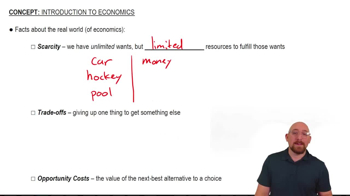
Opportunity cost is the value of the next best alternative foregone when making a decision.
The law of demand states that, ceteris paribus, as the price of a good increases, the quantity demanded decreases.
A PPF shows the maximum combinations of two goods that can be produced with available resources and technology.
A shift in demand occurs due to changes in income, tastes, prices of related goods, expectations, or number of buyers.
Price elasticity of demand measures the responsiveness of quantity demanded to a change in price.
Price elasticity of demand = \(\frac{\%\text{ change in quantity demanded}}{\%\text{ change in price}}\)
Demand is elastic if quantity demanded changes by a larger percentage than price changes (elasticity > 1).
Consumer surplus is the difference between what consumers are willing to pay and what they actually pay.
A normal good has demand that increases with income; an inferior good has demand that decreases as income rises.
The law of supply states that, ceteris paribus, as the price of a good increases, the quantity supplied increases.
Supply shifts due to changes in input prices, technology, expectations, number of sellers, or taxes and subsidies.
Market equilibrium occurs where quantity demanded equals quantity supplied at a certain price.
When price is above equilibrium, a surplus occurs, causing downward pressure on price.
Marginal utility is the additional satisfaction gained from consuming one more unit of a good.
Diminishing marginal utility means each additional unit consumed adds less satisfaction than the previous one.
Consumer choice involves maximizing utility given budget constraints and prices.
A price ceiling is a legal maximum price set below equilibrium, often causing shortages.
A price floor is a legal minimum price set above equilibrium, often causing surpluses.
Fixed costs do not change with output; variable costs vary with the level of production.
Marginal cost is the additional cost of producing one more unit of output.
Profit is maximized where marginal cost equals marginal revenue.