Skip to main content
Nutrition
나의 코스
배우기
시험 준비
AI 튜터
학습 가이드
플래시카드
앱을 사용해 보세요
나의 코스
배우기
시험 준비
AI 튜터
학습 가이드
플래시카드
앱을 사용해 보세요
뒤로
Nutrition Key Concepts Flashcards
카드를 뒤집기 위해 탭할 수 있습니다.
Main energy source for the brain
카드를 뒤집기 위해 탭할 수 있습니다.
👆
Main energy source for the brain
The brain primarily relies on
glucose
, a simple carbohydrate, as its main energy source and cannot efficiently use fat.
진행 상황 추적
컨트롤 버튼이 '내비게이션' 모드로 변경되었습니다.
1/32
추천 영상
VideoThumbView.guidedCourse
01:35
Sources of Carbohydrates
442
views
11
rank
VideoThumbView.guidedCourse
03:34
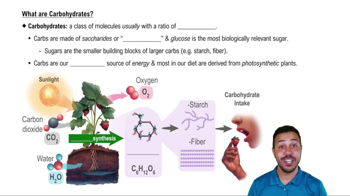
What are Carbohydrates?
728
views
23
rank
VideoThumbView.guidedCourse
03:40
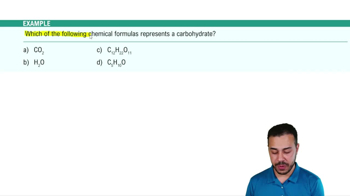
Intro to Carbohydrates Example 1
471
views
14
rank
이 집합의 용어 (32)
하이드의 정의
Main energy source for the brain
The brain primarily relies on
glucose
, a simple carbohydrate, as its main energy source and cannot efficiently use fat.
Ketone bodies and brain energy
During fasting or low-carbohydrate diets, the body produces
ketone bodies
as an alternative fuel for the brain.
Recommended daily fiber intake
Women (19-50 years):
25 grams
per day; Men (19-50 years):
38 grams
per day.
Sources of dietary fiber
Good sources include
whole grains, fruits, vegetables, and legumes
.
Parts of a whole grain
Bran
: outer layer rich in fiber and B vitamins;
Germ
: nutrient-rich core;
Endosperm
: starchy middle layer providing carbohydrates.
Glycemic index (GI)
GI measures how quickly a carbohydrate raises blood glucose. High GI causes rapid spikes; low GI causes gradual increases.
Glycemic index formula
GI = \(\frac{\text{Area under blood glucose curve for test food}}{\text{Area under curve for reference food}} \times 100\)
Diverticulosis and prevention
Diverticulosis is formation of pouches in the colon wall. Prevention includes a
high-fiber diet
to promote regular bowel movements.
Monosaccharides vs disaccharides
Monosaccharides are single sugars (glucose, fructose, galactose). Disaccharides are two sugars linked (sucrose, lactose, maltose).
Top source of added sugars in American diet
Sugar-sweetened beverages
like sodas and energy drinks are the leading source.
Examples of sugar substitutes
Aspartame, sucralose, stevia, and saccharin provide sweetness with little or no calories.
Enzyme breaking down starch in small intestine
Pancreatic amylase
breaks down starch into maltose.
Hormones regulating blood sugar
Insulin
lowers blood glucose by promoting cellular uptake;
glucagon
raises blood glucose by releasing liver stores.
Symptoms of diabetes
Frequent urination, excessive thirst, unexplained weight loss, and fatigue.
Health risks of uncontrolled diabetes
Increased risk of heart disease, kidney damage, nerve damage, and vision loss.
Triglyceride structure
One glycerol molecule bonded to three fatty acids.
Healthy vs unhealthy dietary fats
Healthy fats:
unsaturated fats
(olive oil, nuts, fish). Unhealthy fats:
saturated
(animal products) and
trans fats
(processed foods).
Saturated vs unsaturated fats
Saturated fats have no double bonds and are solid at room temperature; unsaturated fats have one or more double bonds and are liquid.
Phospholipids role
Phospholipids have a glycerol backbone, two fatty acids, and a phosphate group; they are key components of cell membranes.
Functions of fats in the body
Energy storage, insulation, organ protection, absorption of fat-soluble vitamins, and cell membrane structure.
LDL vs HDL cholesterol
LDL is 'bad' cholesterol that increases heart disease risk; HDL is 'good' cholesterol that reduces risk by transporting cholesterol to the liver.
Essential vs non-essential fatty acids
Essential fatty acids must be obtained from diet (e.g., linoleic acid); non-essential can be synthesized by the body.
Types of vegetarian diets
Lacto-ovo: includes dairy and eggs; Lacto: dairy only; Ovo: eggs only; Vegan: excludes all animal products.
Energy provided per gram by macronutrients
Carbohydrates: 4 kcal/g; Proteins: 4 kcal/g; Fats: 9 kcal/g.
Gluconeogenesis
Metabolic process producing glucose from non-carbohydrate sources like amino acids and glycerol, mainly in the liver.
Amino acid structure
Central carbon, amino group (-NH2), carboxyl group (-COOH), hydrogen atom, and unique side chain (R group) that determines properties.
Main enzyme for protein digestion in stomach
Pepsin
begins protein digestion in the stomach.
Transamination
Transfer of an amino group from one amino acid to a keto acid to form a new amino acid.
Health risks of high and low protein intake
High intake may strain kidneys; low intake can cause muscle wasting and immune weakness.
Complete vs incomplete proteins
Complete proteins contain all essential amino acids (animal products, soy); incomplete lack one or more (most plant proteins).
Protein complementation
Combining plant foods (e.g., beans and rice) to provide all essential amino acids.
Kwashiorkor vs Marasmus
Kwashiorkor: protein deficiency causing growth impairment; Marasmus: severe calorie and protein deficiency causing wasting.
 뒤로뒤로
뒤로뒤로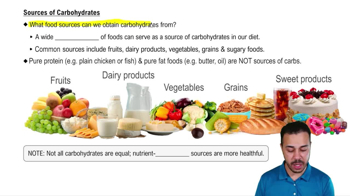
 01:35
01:35