Which of the following compounds is most likely to undergo nucleophilic aromatic substitution via the addition-elimination pathway?
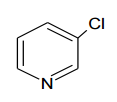
A
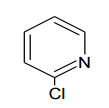
B
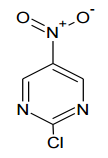
C
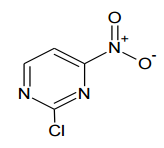
D
4 댓글
검증된 단계별 안내
1
Identify the compounds provided: The images show chlorinated aromatic compounds with varying substituents and positions of nitrogen atoms.
Understand the mechanism: Nucleophilic aromatic substitution via the addition-elimination pathway typically requires an electron-withdrawing group to stabilize the intermediate Meisenheimer complex.
Evaluate electron-withdrawing groups: Look for strong electron-withdrawing groups such as nitro groups (NO2) or nitrogen atoms in the ring that can stabilize the negative charge during the reaction.
Consider the position of substituents: The position of the chlorine atom relative to the electron-withdrawing group is crucial. Ortho and para positions are generally more favorable for stabilization.
Analyze the compounds: The third and fourth images show compounds with nitro groups, which are strong electron-withdrawing groups. The presence of nitrogen atoms in the ring can also contribute to stabilization, making these compounds more likely to undergo nucleophilic aromatic substitution via the addition-elimination pathway.


 검증된 단계별 안내

