교과서 질문
What stereoisomers are formed in the following reactions? Which stereoisomer is the major product?
a. the acid-catalyzed dehydration of 1-pentanol to 2-pentene
1553
views

 Bruice 8th EditionCh. 10 - Reactions of Alcohols, Ethers, Epoxides, Amines, and Sulfur-Containing Compounds문제 16a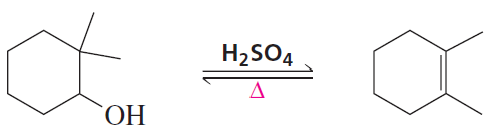
 검증된 단계별 안내

 02:16
02:16
 07:37
07:37 06:20
06:20What stereoisomers are formed in the following reactions? Which stereoisomer is the major product?
a. the acid-catalyzed dehydration of 1-pentanol to 2-pentene
Explain why the following alcohols, when heated with acid, form the same alkene.
Heating an alcohol with sulfuric acid is a good way to prepare a symmetrical ether such as diethyl ether.
b. How would you synthesize ethyl propyl ether?
What stereoisomers are formed in the following reactions? Which stereoisomer is the major product?
b. the acid-catalyzed dehydration of 3,4-dimethyl-3-hexanol to 3,4-dimethyl-3-hexene
What is the major product obtained when each of the following alcohols is heated in the presence of H2SO4?
b.
Heating an alcohol with sulfuric acid is a good way to prepare a symmetrical ether such as diethyl ether.
a. Explain why it is not a good way to prepare an unsymmetrical ether such as ethyl propyl ether.