Ch. 14 - NMR Spectroscopy
Bruice - Organic Chemistry 8th Edition
Bruice8th EditionOrganic ChemistryISBN: 9780135213711당신이 사용하는 게 아니라요?교과서 변경
14장, 문제 78b(6)

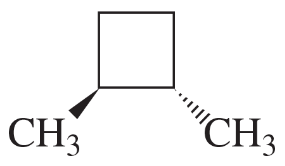
How many signals are produced by each of the following compounds in its
b. 13C NMR spectrum?
6.

검증된 단계별 안내
1
Step 1: Analyze the structure of the compound provided. The compound is a branched alkene with multiple methyl, methylene, and methine groups. Each unique carbon environment will produce a distinct signal in the 13C NMR spectrum.
Step 2: Identify symmetry in the molecule. Symmetry can reduce the number of unique carbon environments because equivalent carbons will produce the same signal. In this molecule, there is no plane of symmetry, so each carbon must be analyzed individually.
Step 3: Count the number of unique carbon environments. Start by identifying the sp2 hybridized carbons in the double bond. These carbons are chemically distinct due to their different substituents.
Step 4: Next, examine the sp3 hybridized carbons. Look for methyl groups, methylene groups, and methine groups. Each carbon attached to different substituents or in different environments will contribute a unique signal.
Step 5: Sum the total number of unique carbon environments identified. This will give the total number of signals expected in the 13C NMR spectrum for this compound.

비슷한 문제에 대한 검증된 영상 답변:

이 영상 해법은 위 문제에 도움이 된다고 튜터들이 추천한 것입니다.
영상 길이:
2m

주요 개념

질문에 올바르게 답하기 위해 반드시 이해해야 하는 핵심 개념들은 다음과 같습니다.

Carbon Environment

In 13C NMR spectroscopy, each unique carbon environment in a molecule produces a distinct signal. A carbon environment is defined by the carbon's connectivity and the types of atoms or groups attached to it. Identifying these environments is crucial for determining the number of signals in the spectrum.
추천 영상:
02:12
Carbonation of Grignard Reagents

Symmetry in Molecules

Molecular symmetry can significantly affect the number of signals observed in a 13C NMR spectrum. If a molecule has symmetrical features, some carbon atoms may be equivalent, leading to fewer signals than the total number of carbons. Understanding the symmetry of the compound helps in predicting the NMR results.
추천 영상:
00:25
Determining Chirality with Plane of Symmetry

Chemical Shifts

Chemical shifts in 13C NMR refer to the resonance frequency of a carbon atom relative to a standard reference, typically tetramethylsilane (TMS). The chemical environment influences these shifts, allowing for differentiation between types of carbon (e.g., sp3, sp2, sp). Recognizing how different functional groups affect chemical shifts is essential for interpreting the spectrum.
추천 영상:
11:44
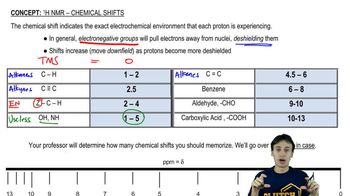
1H NMR Chemical Shifts