Ch. 6 - The Reactions of Alkenes • The Stereochemistry of Addition Reactions
Bruice - Organic Chemistry 8th Edition
Bruice8th EditionOrganic ChemistryISBN: 9780135213711당신이 사용하는 게 아니라요?교과서 변경
6장, 문제 53a

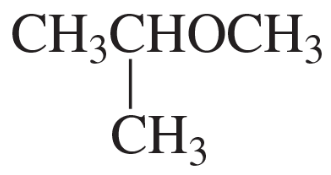
Show how each of the following compounds can be synthesized from an alkene:
a.

검증된 단계별 안내
1
Step 1: Identify the target compound structure. The given compound is 2-methoxy-2-methylpropane, which contains an ether functional group (-OCH3) attached to a tertiary carbon.
Step 2: Choose an appropriate alkene precursor. The alkene precursor for this synthesis is 2-methylpropene (CH3C(CH3)=CH2), as it contains the correct carbon skeleton for the target compound.
Step 3: Select the reaction type. To synthesize an ether, use an electrophilic addition reaction involving an alcohol (methanol, CH3OH) and an acid catalyst (such as H2SO4). This reaction is known as the acid-catalyzed addition of alcohol to an alkene.
Step 4: Describe the mechanism. In the presence of an acid catalyst, the alkene undergoes protonation to form a carbocation intermediate. Since 2-methylpropene forms a tertiary carbocation, it is highly stable. Methanol then acts as a nucleophile and attacks the carbocation, forming the ether bond.
Step 5: Finalize the synthesis. After the nucleophilic attack, the product is deprotonated to yield the final compound, 2-methoxy-2-methylpropane. Ensure proper reaction conditions (temperature, solvent, and catalyst) to optimize the yield.

비슷한 문제에 대한 검증된 영상 답변:

이 영상 해법은 위 문제에 도움이 된다고 튜터들이 추천한 것입니다.
영상 길이:
4m

주요 개념

질문에 올바르게 답하기 위해 반드시 이해해야 하는 핵심 개념들은 다음과 같습니다.

Alkene Reactivity

Alkenes are unsaturated hydrocarbons characterized by at least one carbon-carbon double bond. Their reactivity is primarily due to this double bond, which can undergo various reactions such as electrophilic addition, oxidation, and polymerization. Understanding the types of reactions that alkenes can participate in is crucial for synthesizing other compounds from them.
추천 영상:
가이드 코스
2:09
Alkene Metathesis Concept 1

Synthesis Pathways

Synthesis pathways refer to the step-by-step methods used to convert one compound into another. In organic chemistry, this often involves a series of reactions, including functional group transformations and rearrangements. Identifying the appropriate synthesis pathway from an alkene to the desired compound requires knowledge of reaction mechanisms and the properties of intermediates.
추천 영상:
가이드 코스
2:13
Energy Production In Biochemical Pathways Concept 1

Functional Group Transformations

Functional group transformations involve changing one functional group in a molecule to another, which is essential in organic synthesis. For example, alkenes can be converted into alcohols, halides, or carbonyl compounds through various reactions. Mastery of these transformations allows chemists to design synthetic routes to create complex molecules from simpler alkenes.
추천 영상:
02:36
Identifying Functional Groups