Ch. 6 - The Reactions of Alkenes • The Stereochemistry of Addition Reactions
Bruice - Organic Chemistry 8th Edition
Bruice8th EditionOrganic ChemistryISBN: 9780135213711당신이 사용하는 게 아니라요?교과서 변경
6장, 문제 98

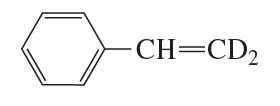
When the following compound is hydrated in the presence of acid, the unreacted alkene is found to have retained the deuterium atoms. What does this tell you about the mechanism for hydration?
Chemical structure of a deuterated alkene with a phenyl group, illustrating acid-catalyzed hydration.

검증된 단계별 안내
1
Analyze the problem: The hydration of an alkene in the presence of acid typically follows a Markovnikov addition mechanism. The observation that the unreacted alkene retains the deuterium atoms suggests that the mechanism does not involve a free rotation or scrambling of the double bond during the reaction.
Step 1: Recall the mechanism of acid-catalyzed hydration. The first step involves protonation of the alkene to form a carbocation intermediate. This step is regioselective, favoring the formation of the more stable carbocation.
Step 2: Consider the retention of deuterium atoms. If the deuterium atoms are retained, it implies that the reaction does not involve a step where the double bond is broken and reformed in a way that would allow the deuterium atoms to exchange positions.
Step 3: Evaluate the possibility of carbocation rearrangement. If a carbocation intermediate forms, it could lead to scrambling of the deuterium atoms. The retention of deuterium suggests that the reaction may proceed through a concerted mechanism or a mechanism that avoids free carbocation formation.
Step 4: Conclude the likely mechanism. The retention of deuterium atoms indicates that the hydration likely proceeds through a mechanism such as a concerted electrophilic addition or a pathway involving a cyclic intermediate (e.g., a mercurinium ion in oxymercuration-demercuration), rather than a free carbocation intermediate.

비슷한 문제에 대한 검증된 영상 답변:

이 영상 해법은 위 문제에 도움이 된다고 튜터들이 추천한 것입니다.
영상 길이:
8m

주요 개념

질문에 올바르게 답하기 위해 반드시 이해해야 하는 핵심 개념들은 다음과 같습니다.

Markovnikov's Rule

Markovnikov's Rule states that in the addition of HX to an alkene, the hydrogen atom will attach to the carbon with the greater number of hydrogen atoms already attached. This principle helps predict the major product of hydration reactions, indicating how the alkene will react with water in the presence of an acid.
추천 영상:
03:54
The 18 and 16 Electron Rule

Carbocation Stability

Carbocation stability is crucial in understanding reaction mechanisms involving alkenes. More stable carbocations (tertiary > secondary > primary) are favored during reactions, influencing the pathway of hydration. The formation of a stable carbocation intermediate is key to determining the outcome of the reaction.
추천 영상:
05:58
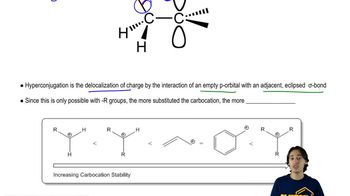
Determining Carbocation Stability

Deuterium Labeling

Deuterium labeling is a technique used to track the movement of atoms in a chemical reaction. In this context, the retention of deuterium atoms in the unreacted alkene suggests that the alkene does not undergo rearrangement during the hydration process, indicating a specific mechanism that preserves the original structure of the alkene.
추천 영상:
03:06
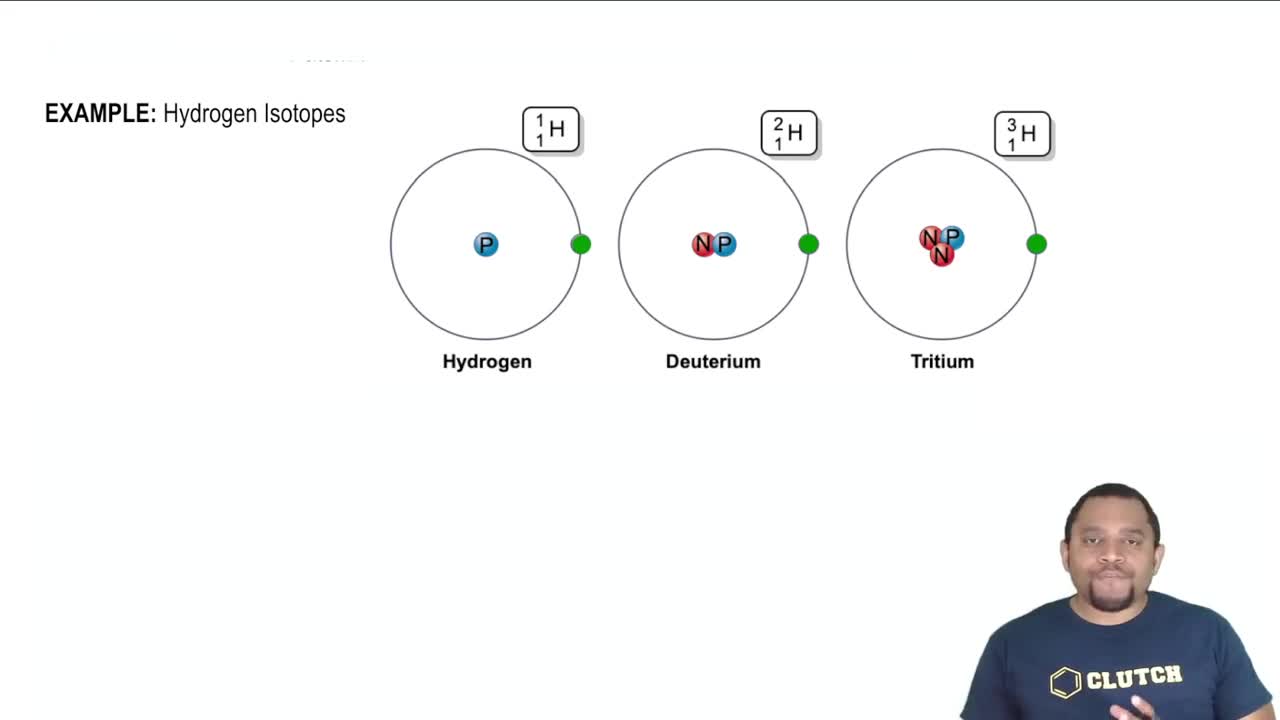
Understanding the hydrogen isotopes.