교과서 질문
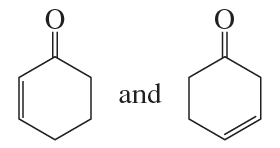
Draw resonance contributors for the following ions:
a.
691
views

 Bruice 8th EditionCh. 8 - Delocalized Electrons: Their Effect on Stability, pKa, and the Products of a Reaction • Aromaticity and Electronic Effects: An Introduction to the Reactions of Benzene문제 66d,e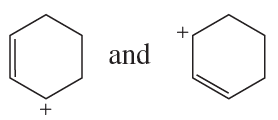
 검증된 단계별 안내

 03:04
03:04
 03:43
03:43 01:34
01:34Draw resonance contributors for the following ions:
a.
a. Draw resonance contributors for the following species. Do not include structures that are so unstable that their contributions to the resonance hybrid would be negligible. Indicate which are major contributors and which are minor contributors to the resonance hybrid.
b. Do any of the species have resonance contributors that all contribute equally to the resonance hybrid?
15.
a. Draw resonance contributors for the following species. Do not include structures that are so unstable that their contributions to the resonance hybrid would be negligible. Indicate which are major contributors and which are minor contributors to the resonance hybrid.
b. Do any of the species have resonance contributors that all contribute equally to the resonance hybrid?
5.
a. How many linear dienes have molecular formula C6H10? (Disregard cis–trans isomers.)
b. How many of the linear dienes in part a are conjugated dienes?
Draw resonance contributors for the following ions:
d.
Draw all the products of the following reaction: