Ch. 10 - Alkynes: Electrophilic Addition and Redox Reactions
Mullins - Organic Chemistry: A Learner Centered Approach 1st Edition
Mullins1st EditionOrganic Chemistry: A Learner Centered ApproachISBN: 9780137566471당신이 사용하는 게 아니라요?교과서 변경
9장, 문제 15a

Calculate Keq for the following acid–base reactions. Which is the best base to use to deprotonate acetylene and make the acetylide anion?
(a) HO- + H―C ≡ C―H ⇌ -C ≡ C―H + H2O

검증된 단계별 안내
1
Step 1: Understand the problem. The goal is to determine whether hydroxide (HO⁻) is a strong enough base to deprotonate acetylene (H―C≡C―H) and form the acetylide anion (⁻C≡C―H). This involves comparing the acidities of the reactants and products using their pKa values.
Step 2: Recall the concept of pKa. The pKa value is a measure of the acidity of a compound. A lower pKa indicates a stronger acid. The equilibrium of an acid-base reaction favors the side with the weaker acid (higher pKa).
Step 3: Identify the pKa values of the relevant species. Acetylene (H―C≡C―H) has a pKa of approximately 25, while water (H₂O), the conjugate acid of hydroxide (HO⁻), has a pKa of approximately 15.7.
Step 4: Compare the pKa values. Since acetylene has a higher pKa (25) than water (15.7), acetylene is a weaker acid than water. This means the equilibrium will not favor the formation of the acetylide anion (⁻C≡C―H) when hydroxide is used as the base.
Step 5: Conclude that hydroxide (HO⁻) is not a strong enough base to deprotonate acetylene effectively. A stronger base, such as sodium amide (NaNH₂, conjugate acid NH₃ with pKa ~38), would be required to deprotonate acetylene and form the acetylide anion.

비슷한 문제에 대한 검증된 영상 답변:

이 영상 해법은 위 문제에 도움이 된다고 튜터들이 추천한 것입니다.

주요 개념

질문에 올바르게 답하기 위해 반드시 이해해야 하는 핵심 개념들은 다음과 같습니다.

Acidity and Basicity

Acidity refers to the tendency of a compound to donate protons (H⁺), while basicity is the ability to accept protons. In organic chemistry, the strength of an acid is often measured by its pKa value; lower pKa values indicate stronger acids. Understanding the relative strengths of acids and bases is crucial for predicting the outcome of acid-base reactions.
추천 영상:
06:21
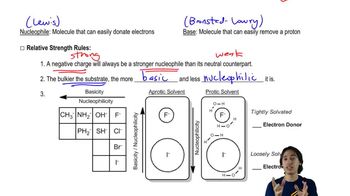
Understanding the difference between basicity and nucleophilicity.

Acetylide Anion

The acetylide anion (C≡C⁻) is formed when acetylene (H―C≡C―H) is deprotonated. This anion is a strong nucleophile and is important in organic synthesis, particularly in reactions involving carbon-carbon bond formation. Identifying a suitable base to generate the acetylide anion is essential for various synthetic applications.
추천 영상:
가이드 코스
0:58
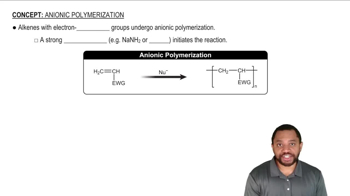
Anionic Polymerization Concept 1

Strong Bases for Deprotonation

To deprotonate a weak acid like acetylene, a strong base is required. Common strong bases include alkoxides (like NaO⁻) and hydrides (like NaH). The choice of base affects the efficiency of the deprotonation process, and understanding the relative strength of potential bases is key to selecting the best one for generating the acetylide anion.
추천 영상:
03:10
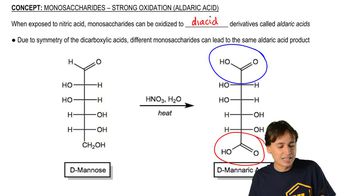
Monosaccharides - Strong Oxidation (Aldaric Acid)