Ch. 13 - Alcohols, Ethers and Related Compounds: Substitution and Elimination
Mullins - Organic Chemistry: A Learner Centered Approach 1st Edition
Mullins1st EditionOrganic Chemistry: A Learner Centered ApproachISBN: 9780137566471당신이 사용하는 게 아니라요?교과서 변경
12장, 문제 100a(i)

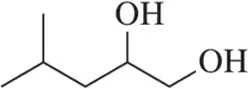
Predict the product for the acid-catalyzed pinacol rearrangement of the following diols.
(a) Structural formula of a diol with two hydroxyl groups on adjacent carbon atoms in a four-carbon chain.

검증된 단계별 안내
1
Identify the structure of the diol involved in the pinacol rearrangement. Pinacol rearrangement typically involves vicinal diols, which are two hydroxyl groups on adjacent carbon atoms.
Understand the mechanism of acid-catalyzed pinacol rearrangement. The process begins with the protonation of one of the hydroxyl groups, making it a better leaving group.
Once protonated, the hydroxyl group leaves as water, forming a carbocation at the carbon where the hydroxyl group was attached. This carbocation is crucial for the rearrangement.
Consider the possibility of carbocation rearrangement. The carbocation can undergo a 1,2-shift, where an adjacent group (often a methyl or hydride) migrates to stabilize the carbocation, forming a new carbocation at the original position of the migrating group.
Finally, the rearranged carbocation is quenched by the remaining hydroxyl group, which loses a proton to form a ketone or aldehyde. This step completes the pinacol rearrangement, resulting in the final product.

비슷한 문제에 대한 검증된 영상 답변:

이 영상 해법은 위 문제에 도움이 된다고 튜터들이 추천한 것입니다.
영상 길이:
4m

주요 개념

질문에 올바르게 답하기 위해 반드시 이해해야 하는 핵심 개념들은 다음과 같습니다.

Pinacol Rearrangement

Pinacol rearrangement is a reaction where a 1,2-diol undergoes acid-catalyzed dehydration to form a ketone or aldehyde. The process involves the migration of an alkyl group from one carbon to another, facilitated by the formation of a carbocation intermediate. Understanding the stability of carbocations and the migratory aptitude of groups is crucial for predicting the product.
추천 영상:
06:08
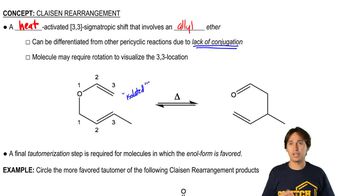
Definition of Claisen Rearrangement

Carbocation Stability

Carbocation stability is a key factor in organic reactions, particularly rearrangements. In pinacol rearrangement, the formation of a stable carbocation intermediate is essential. Stability is influenced by factors such as hyperconjugation, resonance, and the inductive effect, with tertiary carbocations generally being more stable than secondary or primary ones.
추천 영상:
05:58
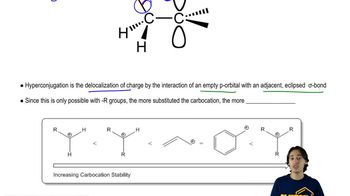
Determining Carbocation Stability

Migratory Aptitude

Migratory aptitude refers to the tendency of a group to migrate during a rearrangement reaction. In pinacol rearrangement, the group that migrates is typically the one that leads to the most stable carbocation. Factors affecting migratory aptitude include the size and electronic nature of the migrating group, with larger and more electron-rich groups often having higher migratory aptitude.
추천 영상:
06:48
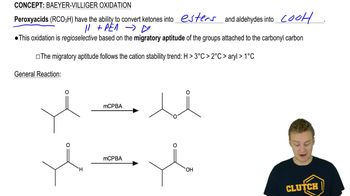
General Reaction: