Ch. 17 - Carbonyl Addition Reactions: Aldehydes and Ketones
Mullins - Organic Chemistry: A Learner Centered Approach 1st Edition
Mullins1st EditionOrganic Chemistry: A Learner Centered ApproachISBN: 9780137566471당신이 사용하는 게 아니라요?교과서 변경
16장, 문제 79

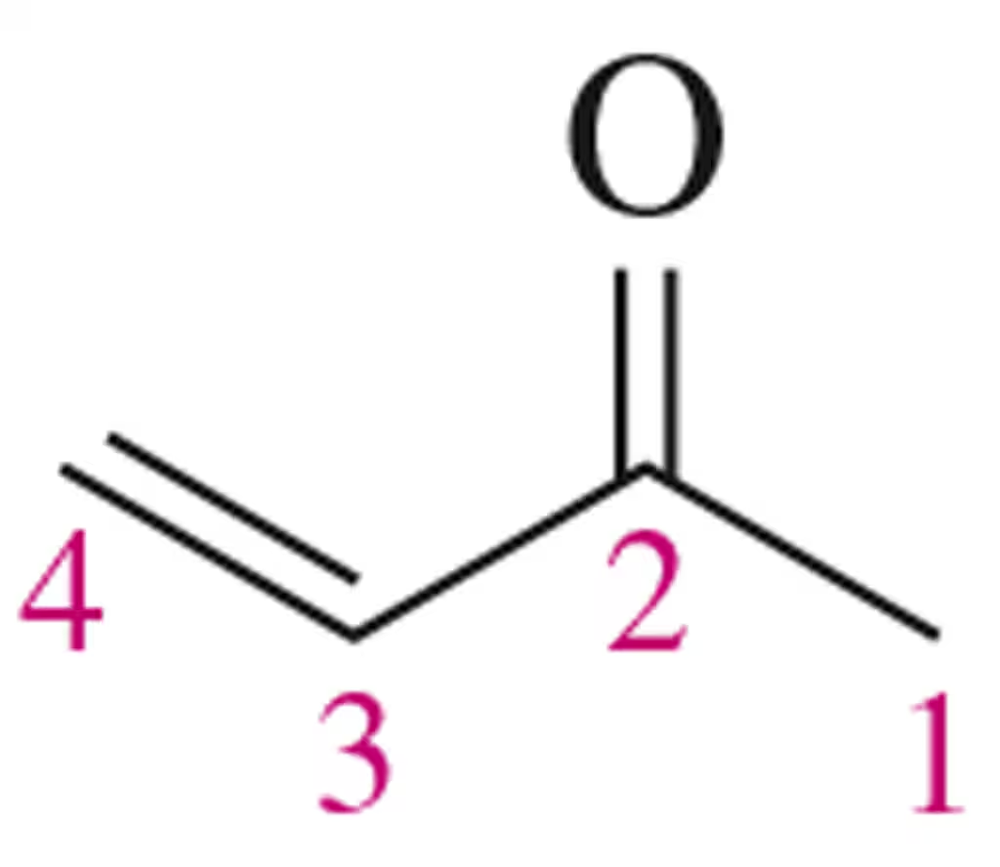
We show in Chapter 20 that α , β-unsaturated ketones are electrophilic at C4. Rationalize this observation.
Chemical structure of an α,β-unsaturated ketone with numbered carbon atoms 1 to 4, highlighting electrophilic site at C4.

검증된 단계별 안내
1
Understand the structure of α, β-unsaturated ketones: These compounds contain a conjugated system where a carbonyl group (C=O) is directly connected to a double bond (C=C). This conjugation allows for delocalization of electrons across the π-system, which is key to their reactivity.
Analyze the electrophilicity of the β-carbon (C₄): The conjugated system creates resonance structures. One important resonance structure shows the movement of electrons from the double bond toward the oxygen atom of the carbonyl group, resulting in a partial positive charge on the β-carbon (C₄). This makes C₄ electrophilic and susceptible to nucleophilic attack.
Write the resonance structures: To rationalize the observation, draw the resonance structures of the α, β-unsaturated ketone. Show how the electrons from the π-bond of the C=C double bond shift toward the carbonyl oxygen, creating a positive charge on C₄. Use MathML to represent the resonance structures clearly.
Consider the role of the carbonyl group: The carbonyl oxygen is highly electronegative and pulls electron density away from the conjugated system. This effect further enhances the partial positive charge on C₄, increasing its electrophilicity.
Relate this to reactivity: The electrophilic nature of C₄ explains why α, β-unsaturated ketones are reactive at this position. Nucleophiles are attracted to the positively charged C₄, leading to addition reactions at this site. This concept will be explored in more detail in Chapter 20.

비슷한 문제에 대한 검증된 영상 답변:

이 영상 해법은 위 문제에 도움이 된다고 튜터들이 추천한 것입니다.
영상 길이:
1m

주요 개념

질문에 올바르게 답하기 위해 반드시 이해해야 하는 핵심 개념들은 다음과 같습니다.

Electrophilicity

Electrophilicity refers to the tendency of a species to accept electrons. In organic chemistry, electrophiles are typically electron-deficient species that can react with nucleophiles, which are electron-rich. Understanding the factors that influence electrophilicity, such as the presence of electron-withdrawing groups, is crucial for rationalizing the reactivity of compounds like α, β-unsaturated ketones.
추천 영상:
03:
Nucleophile or Electrophile

α, β-Unsaturated Ketones

α, β-Unsaturated ketones are compounds that contain a carbonyl group (C=O) adjacent to a double bond (C=C). This structural feature creates a conjugated system that stabilizes the molecule and enhances its electrophilic character at the β-carbon. The resonance between the carbonyl and the double bond plays a significant role in determining the reactivity of these compounds.
추천 영상:
02:39
The difference between saturated and unsaturated molecules.

Resonance Stabilization

Resonance stabilization occurs when a molecule can be represented by multiple valid Lewis structures, leading to a delocalization of electrons. In α, β-unsaturated ketones, the resonance between the carbonyl and the adjacent double bond increases the positive character at the β-carbon, making it more electrophilic. This concept is essential for understanding why these compounds are reactive towards nucleophiles.
추천 영상:
03:43
The radical stability trend.