Ionic compounds like sodium acetate have a high melting point. Despite this, they are highly soluble in water. Why?
Ch. 3 - Alkanes and Cycloalkanes: Properties and Conformational Analysis

Mullins1st EditionOrganic Chemistry: A Learner Centered ApproachISBN: 9780137566471당신이 사용하는 게 아니라요?교과서 변경
모든 교과서
Mullins 1st Edition
Ch. 3 - Alkanes and Cycloalkanes: Properties and Conformational Analysis
문제 75a
Mullins 1st Edition
Ch. 3 - Alkanes and Cycloalkanes: Properties and Conformational Analysis
문제 75a2장, 문제 75a
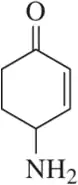
Identify the functional groups in each of the following molecules. [The number of functional groups has been given to assist you.]
(a) [Three]

검증된 단계별 안내1
Step 1: Understand the concept of functional groups. Functional groups are specific groups of atoms within molecules that are responsible for the characteristic chemical reactions of those molecules. Examples include hydroxyl (-OH), carbonyl (>C=O), carboxyl (-COOH), amino (-NH2), and others.
Step 2: Examine the molecular structure provided in part (a). Look for distinct regions in the molecule where specific atoms or groups of atoms are arranged in a way that matches known functional groups.
Step 3: Identify the first functional group by locating a specific arrangement of atoms, such as a hydroxyl group (-OH), carbonyl group (>C=O), or any other recognizable functional group.
Step 4: Continue analyzing the molecule to identify the second functional group. Pay attention to different parts of the molecule that may contain unique arrangements of atoms indicative of another functional group.
Step 5: Locate the third functional group by carefully inspecting the remaining parts of the molecule. Ensure that you do not overlook any functional groups that may be present in less obvious locations, such as within rings or chains.

비슷한 문제에 대한 검증된 영상 답변:
이 영상 해법은 위 문제에 도움이 된다고 튜터들이 추천한 것입니다.
영상 길이:
3m주요 개념
질문에 올바르게 답하기 위해 반드시 이해해야 하는 핵심 개념들은 다음과 같습니다.
Functional Groups
Functional groups are specific groups of atoms within molecules that are responsible for the characteristic chemical reactions of those molecules. They determine the properties and reactivity of organic compounds. Common functional groups include hydroxyl (-OH), carboxyl (-COOH), and amino (-NH2), each imparting distinct behaviors to the molecules they are part of.
추천 영상:
Identifying Functional Groups
Identification of Functional Groups
Identifying functional groups involves recognizing specific atom arrangements and bonds within a molecule. This process often requires knowledge of molecular structures and the ability to interpret chemical formulas. Techniques such as spectroscopy or chemical reactivity tests can also aid in identifying these groups, which is crucial for predicting the behavior of the compound in chemical reactions.
추천 영상:
Identifying Functional Groups
Molecular Structure
Molecular structure refers to the three-dimensional arrangement of atoms in a molecule, including the types of bonds and the spatial orientation of functional groups. Understanding molecular structure is essential for predicting how a molecule will interact with others, its stability, and its reactivity. Visualization tools like Lewis structures or molecular models can help in grasping these concepts.
추천 영상:
Review of Molecular Orbitals
관련 실천
교과서 질문
1646
views
교과서 질문
Identify the mistakes contained within the following structures.
(a)
1612
views
교과서 질문
Identify the functional groups in each of the following molecules. [The number of functional groups has been given to assist you.]
(d) [Two]
963
views
교과서 질문
Despite methylcyclohexane (98.2 amu) having a higher molecular weight than toluene (92.1 amu), toluene melts at a higher temperature. Why? [Think about how the molecules can interact with each other based on their shape.]
1593
views
교과서 질문
Identify the functional groups in each of the following molecules. [The number of functional groups has been given to assist you.]
(b) [Two]
950
views
교과서 질문
Identify the functional groups in each of the following molecules. [The number of functional groups has been given to assist you.]
(c) [Three]
1182
views