
Evidence for the concertedness of epoxide formation comes from the stereospecificity of the reaction. If step 2 of a hypothetical stepwise mechanism were slow enough to make the reaction non-concerted, how would the product distribution change?
Ch. 9 - Alkenes 2: Oxidation and Reduction

Mullins1st EditionOrganic Chemistry: A Learner Centered ApproachISBN: 9780137566471당신이 사용하는 게 아니라요?교과서 변경
8장, 문제 15
Calculate the atom economy of the reaction in Figure 9.24. [Catalysts are not included in the atom economy calculation.]

검증된 단계별 안내1
Step 1: Understand the concept of atom economy. Atom economy is a measure of the efficiency of a chemical reaction in terms of how much of the reactants' mass is incorporated into the desired product. It is calculated using the formula: Atom Economy = (Molecular Weight of Desired Product / Total Molecular Weight of Reactants) × 100.
Step 2: Identify the desired product and reactants from the reaction. The desired product is the epoxide (cyclopropane with an oxygen atom), and the reactants include the alkene (starting material) and hydrogen peroxide (H₂O₂). Catalysts such as FeCl₃·H₂O and 1-methyl imidazole are not included in the atom economy calculation.
Step 3: Determine the molecular weights of the desired product and reactants. Use the molecular formula of each compound and the atomic weights of the elements (C = 12, H = 1, O = 16) to calculate their molecular weights. For example, calculate the molecular weight of the alkene and H₂O₂ as reactants, and the epoxide as the product.
Step 4: Add the molecular weights of all reactants to find the total molecular weight of reactants. This includes the alkene and H₂O₂, but excludes the catalysts.
Step 5: Apply the atom economy formula. Divide the molecular weight of the desired product (epoxide) by the total molecular weight of the reactants, and multiply by 100 to express the atom economy as a percentage.

비슷한 문제에 대한 검증된 영상 답변:
이 영상 해법은 위 문제에 도움이 된다고 튜터들이 추천한 것입니다.
영상 길이:
7m주요 개념
질문에 올바르게 답하기 위해 반드시 이해해야 하는 핵심 개념들은 다음과 같습니다.
Atom Economy
Atom economy is a measure of the efficiency of a chemical reaction in terms of how well atoms from the reactants are utilized in the final product. It is calculated by dividing the molar mass of the desired product by the total molar mass of all reactants, then multiplying by 100 to express it as a percentage. A higher atom economy indicates a more efficient reaction, minimizing waste and maximizing the use of resources.
추천 영상:
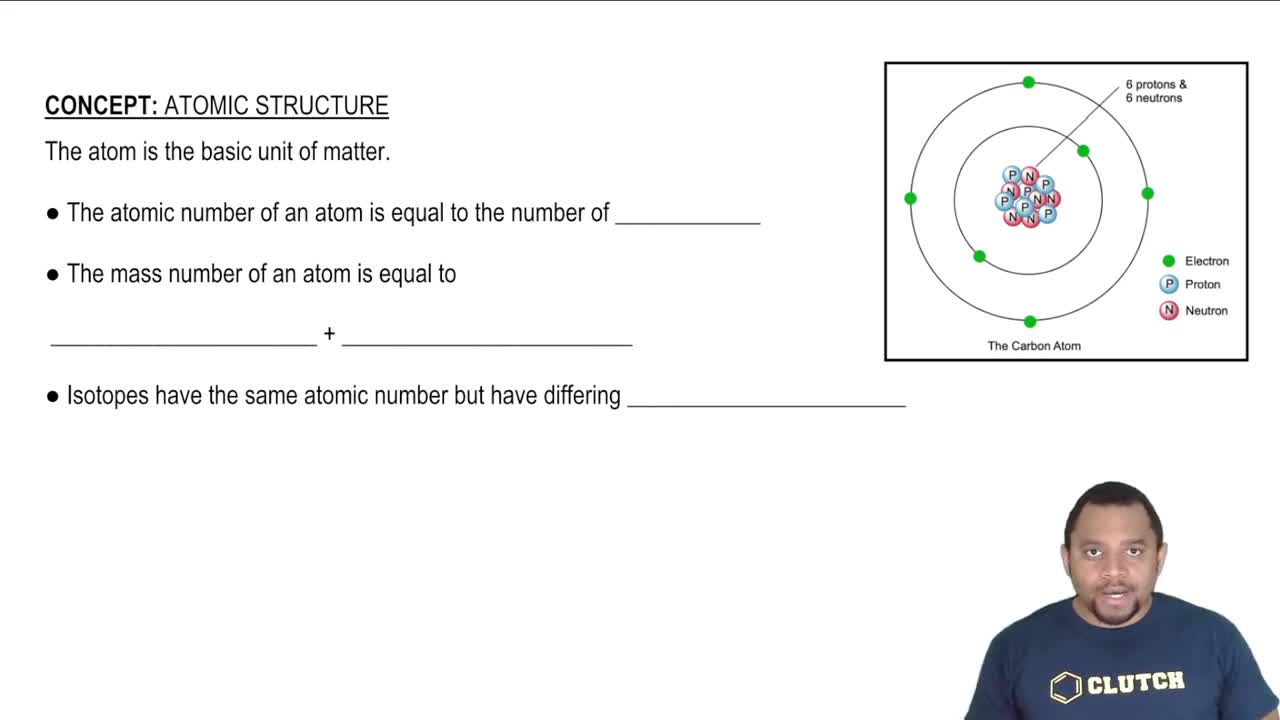
The difference between atomic numbers and atomic mass.
Molar Mass Calculation
Molar mass is the mass of one mole of a substance, typically expressed in grams per mole (g/mol). To calculate the molar mass of a compound, one must sum the atomic masses of all the atoms in its molecular formula. This calculation is essential for determining the total mass of reactants and products in a reaction, which is necessary for calculating atom economy.
추천 영상:
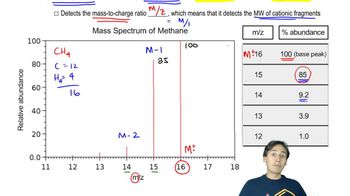
How to Read a Mass Spectrum
Catalysts in Reactions
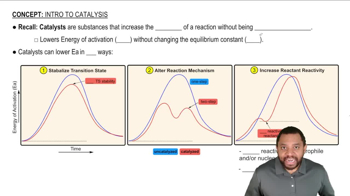
Catalysts are substances that increase the rate of a chemical reaction without being consumed in the process. While they play a crucial role in facilitating reactions, they are not included in the atom economy calculation because they do not alter the overall mass of reactants or products. Understanding the role of catalysts helps clarify the focus on the main reactants and products when assessing atom economy.
추천 영상:
가이드 코스
Introduction to Catalysis Concept 1
관련 실천
교과서 질문
1024
views
교과서 질문
How does the carbonyl in mCPBA weaken the O―O σ bond (i.e., make a better leaving group)?
1161
views
교과서 질문
Predict the product(s) when each of the following are reacted with mCPBA, making sure to indicate the relative stereochemical outcome. Indicate any racemic mixtures by drawing both enantiomers.
(d)
1156
views
교과서 질문
Suggest an alkene that could be used to make each of the following halohydrins.
(a)
1260
views
교과서 질문
Suggest an alkene that could be used to make each of the following halohydrins.
(c)
1118
views
교과서 질문
Predict the product(s) when each of the following are reacted with mCPBA, making sure to indicate the relative stereochemical outcome. Indicate any racemic mixtures by drawing both enantiomers.
(a)
1374
views
