
교과서 질문
Bromination of a highly electron-rich alkene such as 2-methoxybut-2-ene has been shown to produce approximately equal mixtures of the trans- and cis-dibromide. Suggest an explanation for this observation.
1635
views


 검증된 단계별 안내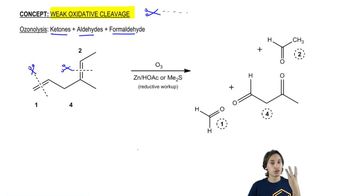
 06:30
06:30
 00:48
00:48 05:14
05:14Bromination of a highly electron-rich alkene such as 2-methoxybut-2-ene has been shown to produce approximately equal mixtures of the trans- and cis-dibromide. Suggest an explanation for this observation.
In Chapter 19, we discuss the reaction of enols with bromine. This reaction produces α -bromoketones in good yields. Suggest a mechanism for this reaction and justify its deviation from the dibromide product you might have expected.
At the beginning of Chapter 9, we stated that after finishing Chapters 8 and 9, we would have the ability to make a large variety of functional groups using related reactions. Show the reagent(s) necessary to convert 1-isobutylcyclohexene into the following molecules.
(a)
In spite of being mechanistically similar to some of the reactions we saw in Chapter 8, rearrangement never occurred here in Chapter 9. Why doesn't rearrangement occur in the following bromination reaction despite the proximity of a more substituted carbon?
Predict the product of ozonolysis of the triglyceride shown.
At the beginning of Chapter 9, we stated that after finishing Chapters 8 and 9, we would have the ability to make a large variety of functional groups using related reactions. Show the reagent(s) necessary to convert 1-isobutylcyclohexene into the following molecules.
(b)