
Ch. 15 - Conjugated Systems, Orbital Symmetry, and Ultraviolet Spectroscopy
Wade - Organic Chemistry 9th Edition
Wade9th EditionOrganic ChemistryISBN: 9780135213728당신이 사용하는 게 아니라요?교과서 변경
15장, 문제 41d

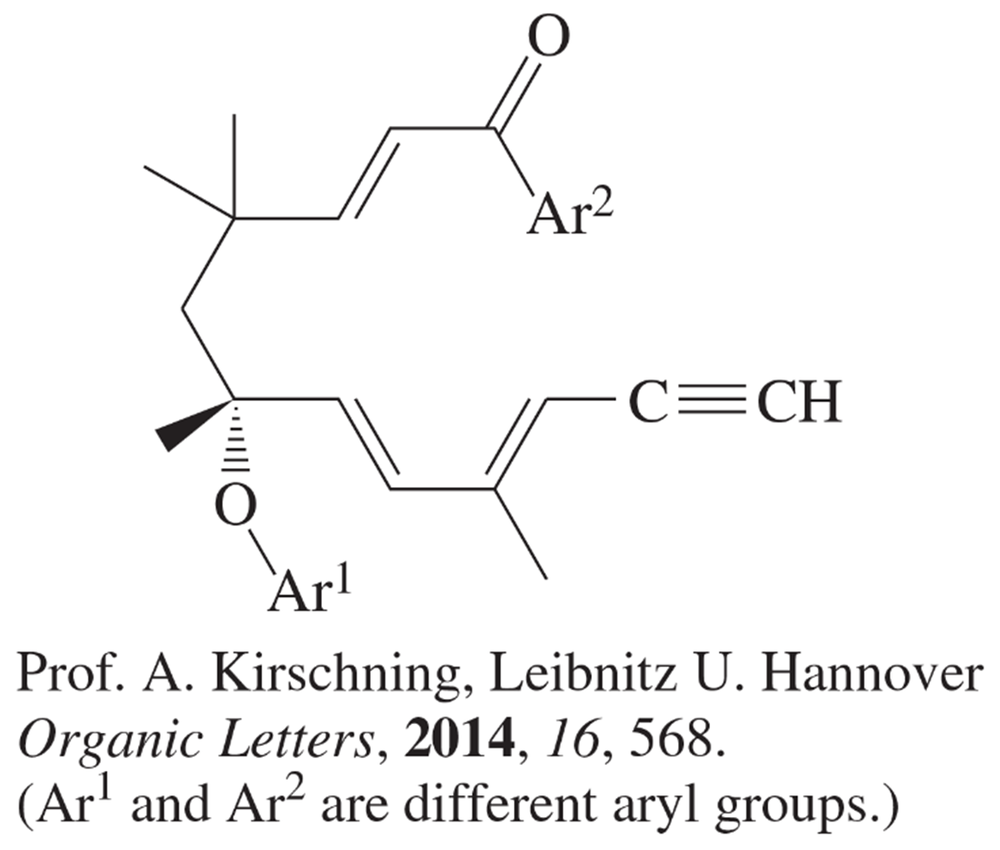
An important variation of the Diels–Alder reaction is intramolecular, in which the diene and the dienophile are connected. This type of Diels–Alder reaction makes two new rings. Draw the compound produced in each of these examples; try to predict stereochemistry (using models will help). In some cases, Lewis acid catalysts are used; that can be ignored for this problem.
(d)

검증된 단계별 안내
1
Step 1: Analyze the structure provided in the image. The molecule contains a diene (two conjugated double bonds) and a dienophile (an alkyne group, C≡CH) connected within the same molecule, making it suitable for an intramolecular Diels–Alder reaction.
Step 2: Identify the reactive sites. The diene will react with the dienophile in a [4+2] cycloaddition, forming two new sigma bonds and creating two new rings. The reaction is stereospecific, meaning the stereochemistry of the product will depend on the spatial arrangement of the substituents in the starting material.
Step 3: Predict the regiochemistry. The electron-withdrawing group (Ar²-C=O) attached to the dienophile will direct the reaction, ensuring that the most stable product is formed. The diene and dienophile will align to maximize orbital overlap and minimize steric hindrance.
Step 4: Consider stereochemistry. The substituents on the diene (Ar¹ and the oxygen group) and dienophile will influence the stereochemistry of the product. The reaction typically proceeds via a concerted mechanism, preserving the relative stereochemistry of the substituents.
Step 5: Draw the product. The intramolecular Diels–Alder reaction will form a bicyclic structure. The newly formed rings will include the original substituents (Ar¹, Ar², and the oxygen group), and the stereochemistry will reflect the spatial arrangement of the starting material. Ensure that the product includes the correct connectivity and stereochemistry.

비슷한 문제에 대한 검증된 영상 답변:

이 영상 해법은 위 문제에 도움이 된다고 튜터들이 추천한 것입니다.
영상 길이:
8m

주요 개념

질문에 올바르게 답하기 위해 반드시 이해해야 하는 핵심 개념들은 다음과 같습니다.

Diels–Alder Reaction

The Diels–Alder reaction is a [4+2] cycloaddition reaction between a conjugated diene and a dienophile, resulting in the formation of a six-membered ring. This reaction is significant in organic synthesis due to its ability to create complex cyclic structures efficiently. Understanding the mechanism, including the formation of the transition state and the role of orbital overlap, is crucial for predicting the products and their stereochemistry.
추천 영상:
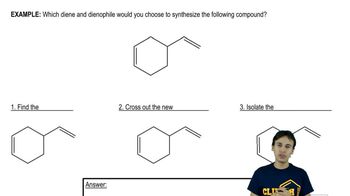
04:02
Diels-Alder Retrosynthesis

Intramolecular Reactions

Intramolecular reactions occur when the reactants are part of the same molecule, allowing for a more favorable reaction environment. In the context of the Diels–Alder reaction, this means that the diene and dienophile are connected, leading to the formation of multiple rings in a single step. This can influence the stereochemistry and regioselectivity of the product, making it essential to visualize the molecular structure during the reaction.
추천 영상:
가이드 코스
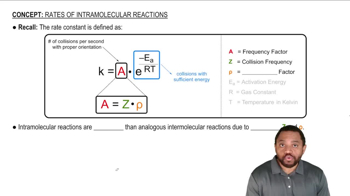
2:29
Rates of Intramolecular Reactions Concept 1

Stereochemistry

Stereochemistry refers to the spatial arrangement of atoms in molecules and how this affects their chemical behavior. In the Diels–Alder reaction, the stereochemical outcome is determined by the orientation of the diene and dienophile during the reaction. Predicting stereochemistry involves understanding concepts like cis/trans isomerism and the influence of substituents on the diene and dienophile, which can affect the final product's configuration.
추천 영상:
가이드 코스
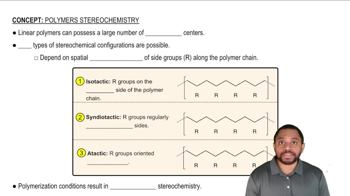
1:38
Polymer Stereochemistry Concept 1