Ch. 22 - Condensations and Alpha Substitutions of Carbonyl Compounds
Wade - Organic Chemistry 9th Edition
Wade9th EditionOrganic ChemistryISBN: 9780135213728당신이 사용하는 게 아니라요?교과서 변경
22장, 문제 77b

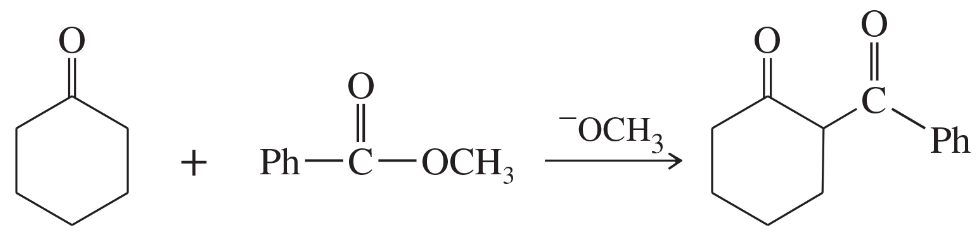
Propose mechanisms for the following reactions.
(b)

검증된 단계별 안내
1
Identify the type of reaction taking place (e.g., substitution, elimination, addition, etc.) by analyzing the reactants and products. Look for functional group changes or rearrangements.
Determine the reactive sites in the molecule. For example, locate electrophilic and nucleophilic centers based on the structure of the reactants.
Propose the first step of the mechanism, which often involves the formation of an intermediate. For example, in a nucleophilic substitution, the nucleophile attacks the electrophile, leading to bond formation and/or bond cleavage.
Continue the mechanism by considering subsequent steps, such as rearrangements, proton transfers, or elimination of leaving groups, to form intermediates or the final product.
Verify the proposed mechanism by ensuring that it follows the principles of organic chemistry, such as charge conservation, proper electron flow (using curved arrows), and consistency with the observed product.

비슷한 문제에 대한 검증된 영상 답변:

이 영상 해법은 위 문제에 도움이 된다고 튜터들이 추천한 것입니다.

주요 개념

질문에 올바르게 답하기 위해 반드시 이해해야 하는 핵심 개념들은 다음과 같습니다.

Reaction Mechanisms

A reaction mechanism is a step-by-step description of the process by which reactants transform into products. It outlines the individual steps, including bond breaking and formation, and the intermediates formed during the reaction. Understanding mechanisms is crucial for predicting the outcome of reactions and for designing new synthetic pathways.
추천 영상:
02:16
Heck Reaction Mechanism

Types of Organic Reactions

Organic reactions can be classified into several types, including substitution, addition, elimination, and rearrangement reactions. Each type has distinct characteristics and mechanisms. Recognizing the type of reaction helps in predicting the behavior of reactants and the nature of the products formed.
추천 영상:
07:37
Properties and Types of Pericyclic Reactions

Curved Arrow Notation

Curved arrow notation is a visual representation used in organic chemistry to depict the movement of electrons during chemical reactions. Arrows indicate the direction of electron flow, showing how bonds are broken and formed. Mastery of this notation is essential for accurately illustrating and understanding reaction mechanisms.
추천 영상:
06:20
Alternative MO Notation for Dienes