Ch. 22 - Condensations and Alpha Substitutions of Carbonyl Compounds
Wade - Organic Chemistry 9th Edition
Wade9th EditionOrganic ChemistryISBN: 9780135213728당신이 사용하는 게 아니라요?교과서 변경
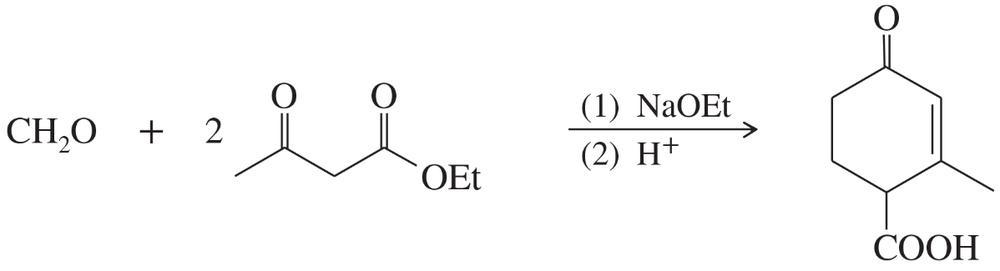
22장, 문제 85a

Show reaction sequences (not detailed mechanisms) that explain these transformations:
(a)

검증된 단계별 안내
1
Analyze the given reaction transformation by identifying the starting material, the product, and any functional group changes. This will help determine the type of reaction (e.g., substitution, elimination, addition, oxidation, reduction).
Break the transformation into smaller steps if necessary. For example, if the reaction involves multiple functional group changes, consider intermediate compounds that could form during the process.
Propose the first reaction in the sequence. For instance, if the starting material has a hydroxyl group (-OH) and the product has a carbonyl group (C=O), the first step might involve oxidation using a reagent like PCC (Pyridinium chlorochromate).
Continue proposing subsequent reactions based on the intermediates formed. For example, if the intermediate has a carbonyl group and the product has an alkene, the next step might involve a Wittig reaction or an elimination reaction.
Verify the overall sequence by ensuring that the reagents and conditions proposed for each step are compatible with the functional groups present and lead to the desired product.

비슷한 문제에 대한 검증된 영상 답변:

이 영상 해법은 위 문제에 도움이 된다고 튜터들이 추천한 것입니다.
영상 길이:
3m

주요 개념

질문에 올바르게 답하기 위해 반드시 이해해야 하는 핵심 개념들은 다음과 같습니다.

Reaction Mechanisms

Reaction mechanisms describe the step-by-step process by which reactants are converted into products. Understanding these mechanisms is crucial for predicting the outcome of chemical reactions and for designing synthetic pathways. While the question asks for reaction sequences rather than detailed mechanisms, a foundational knowledge of how reactions proceed helps in visualizing the transformations involved.
추천 영상:
02:16
Heck Reaction Mechanism

Functional Groups

Functional groups are specific groups of atoms within molecules that are responsible for the characteristic chemical reactions of those molecules. Recognizing functional groups is essential for understanding how different compounds will react in a given sequence. This knowledge allows chemists to predict the reactivity and properties of organic compounds during transformations.
추천 영상:
02:36
Identifying Functional Groups

Synthetic Pathways

Synthetic pathways refer to the series of chemical reactions that lead to the formation of a desired product from starting materials. Analyzing these pathways involves identifying key intermediates and the transformations they undergo. This concept is vital for planning efficient routes in organic synthesis, especially when multiple steps are required to achieve the final product.
추천 영상:
가이드 코스
2:13
Energy Production In Biochemical Pathways Concept 1