Ch.8 - Reactions of Alkenes
Wade - Organic Chemistry 9th Edition
Wade9th EditionOrganic ChemistryISBN: 9780135213728당신이 사용하는 게 아니라요?교과서 변경
8장, 문제 47m

Limonene is one of the compounds that give lemons their tangy odor. Show the structures of the products expected when limonene reacts with an excess of each of these reagents.
Chemical structure of limonene, a compound contributing to the tangy odor of lemons.
m. CHBr3 and 50% aq. NaOH

검증된 단계별 안내
1
Step 1: Analyze the structure of limonene. Limonene is a cyclic terpene with a six-membered ring containing a double bond and an isopropenyl group attached to the ring. The molecule has two reactive double bonds that can undergo chemical reactions.
Step 2: Understand the reaction conditions. The reagents CHBr3 (bromoform) and 50% aqueous NaOH are used in the haloform reaction. This reaction typically targets methyl ketones, but in this case, it can also react with the double bonds in limonene under basic conditions.
Step 3: Predict the interaction of CHBr3 and NaOH with limonene. The double bonds in limonene can undergo electrophilic addition reactions. The basic conditions provided by NaOH can deprotonate CHBr3, generating a reactive intermediate (tribromomethide ion) that can attack the double bonds.
Step 4: Consider the excess reagent. Since the reaction involves an excess of CHBr3 and NaOH, both double bonds in limonene are likely to react. The products will include brominated derivatives where bromine atoms are added across the double bonds.
Step 5: Draw the expected products. The first double bond in the ring will react to form a dibrominated cyclohexane derivative, while the isopropenyl group will react to form a brominated side chain. Ensure to account for stereochemistry if applicable.

비슷한 문제에 대한 검증된 영상 답변:

이 영상 해법은 위 문제에 도움이 된다고 튜터들이 추천한 것입니다.
영상 길이:
4m

주요 개념

질문에 올바르게 답하기 위해 반드시 이해해야 하는 핵심 개념들은 다음과 같습니다.

Limonene Structure and Properties

Limonene is a cyclic monoterpene with a distinctive structure characterized by a six-membered ring and a double bond. It is known for its citrus aroma and is commonly found in the peels of citrus fruits. Understanding its structure is crucial for predicting its reactivity with various reagents, as the presence of double bonds makes it susceptible to electrophilic addition reactions.
추천 영상:
가이드 코스
1:19
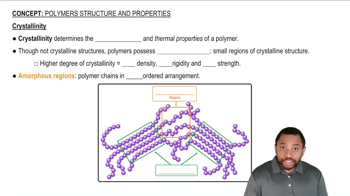
Polymers Structure and Properties Concept 1

Electrophilic Addition Reactions

Electrophilic addition reactions involve the addition of an electrophile to a nucleophilic site, typically a double bond in alkenes. In the case of limonene, reagents like CHBr3 can act as electrophiles, leading to the formation of brominated products. Recognizing the mechanism of these reactions helps in predicting the products formed when limonene reacts with specific reagents.
추천 영상:
05:39
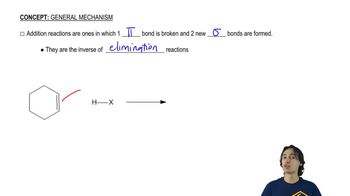
Features of Addition Mechanisms.

Reagents and Reaction Conditions

The choice of reagents and reaction conditions significantly influences the outcome of organic reactions. In this case, CHBr3 and 50% aqueous NaOH are used, where CHBr3 serves as a brominating agent, and NaOH can facilitate the reaction by providing a basic environment. Understanding how these reagents interact with limonene is essential for determining the expected products of the reaction.
추천 영상:
01:52
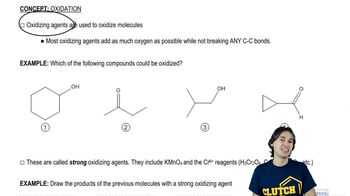
Reagents