Skip to main content
Introduction to Sociology
나의 코스
배우기
AI 튜터
학습 가이드
플래시카드
탐험해 보세요
앱을 사용해 보세요
나의 코스
배우기
AI 튜터
학습 가이드
플래시카드
탐험해 보세요
앱을 사용해 보세요
뒤로
Sectors of the Economy definitions
카드를 뒤집기 위해 탭할 수 있습니다.
Primary Sector
카드를 뒤집기 위해 탭할 수 있습니다.
👆
Primary Sector
Stage focused on extraction or production of raw materials such as farming, mining, fishing, and raising livestock.
진행 상황 추적
컨트롤 버튼이 '내비게이션' 모드로 변경되었습니다.
1/15
관련 플래시카드
추천 영상
Sectors of the Economy quiz
Sectors of the Economy
15 용어
VideoThumbView.guidedCourse
00:18
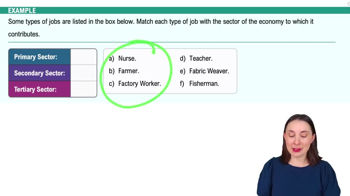
Sectors of the Economy Example 2
66
views
1
rank
VideoThumbView.guidedCourse
01:16
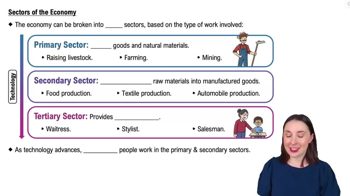
Sectors of the Economy Example 1
71
views
1
rank
VideoThumbView.guidedCourse
01:34
Sectors of the Economy
102
views
1
rank
이 집합의 용어 (15)
하이드의 정의
Primary Sector
Stage focused on extraction or production of raw materials such as farming, mining, fishing, and raising livestock.
Secondary Sector
Stage involving transformation of raw materials into manufactured goods, often through factory-based work.
Tertiary Sector
Stage centered on providing services, including professional, administrative, and consumer-oriented roles.
Raw Materials
Natural resources obtained directly from the environment, serving as inputs for further production.
Manufactured Goods
Products created by processing raw materials, typically in factories, such as textiles or automotive parts.
Service-Based Professions
Occupations focused on delivering intangible benefits, including roles like waitstaff, stylists, or salespeople.
Global Stratification
Worldwide ranking of countries based on economic development and sectoral focus, highlighting inequalities.
Interdependence
Mutual reliance among nations for resources, labor, technology, and investments within the global economy.
Division of Labor
Allocation of different types of work across sectors and societies, shaping economic roles and status.
Modernization
Process where societies shift from primary and secondary activities toward service-oriented economies.
Economic Development
Advancement in a nation's productive capacity, often marked by a shift toward the tertiary sector.
Low-Income Countries
Nations with economies heavily reliant on extraction and manufacturing, with limited service sector presence.
High-Income Countries
Nations characterized by a dominant service sector and advanced technological and investment capacities.
Technology
Tools and innovations that drive shifts in employment from extraction and manufacturing to services.
Socioeconomic Status
Position within society influenced by the type of economic sector work and overall national wealth.
 뒤로뒤로
뒤로뒤로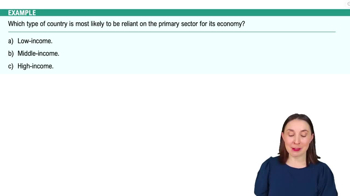
 00:18
00:18