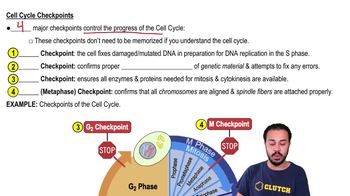
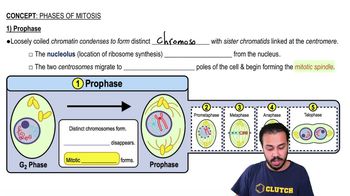
After S phase, what makes up a single chromosome?
a. two daughter chromosomes
b. a double-stranded DNA molecule
c. two single-stranded DNA molecules
d. two sister chromatids
검증된 단계별 안내
1
Understand that the S phase is part of the cell cycle where DNA replication occurs.
During the S phase, each chromosome is duplicated, resulting in two identical copies.
These identical copies are known as sister chromatids.
Each sister chromatid consists of a double-stranded DNA molecule.
After the S phase, a single chromosome is composed of two sister chromatids joined at the centromere.
비슷한 문제에 대한 검증된 영상 답변:
이 영상 해법은 위 문제에 도움이 된다고 튜터들이 추천한 것입니다.
영상 길이:
2m
영상 재생:
0 댓글
주요 개념
질문에 올바르게 답하기 위해 반드시 이해해야 하는 핵심 개념들은 다음과 같습니다.
Chromosome Structure
A chromosome is a structure within cells that contains DNA and proteins. After the S phase of the cell cycle, each chromosome consists of two identical halves called sister chromatids, which are joined at a region known as the centromere. This structure is crucial for ensuring accurate DNA replication and distribution during cell division.
The S phase, or synthesis phase, is a part of the cell cycle where DNA replication occurs. During this phase, each chromosome is duplicated, resulting in two sister chromatids for each original chromosome. Understanding the S phase is essential for grasping how genetic material is prepared for cell division.
Sister chromatids are the two identical copies of a single chromosome that are formed during DNA replication in the S phase. They remain attached at the centromere until they are separated during mitosis or meiosis. Recognizing the role of sister chromatids is vital for understanding the mechanics of chromosome segregation during cell division.

 2:29분
2:29분 검증된 단계별 안내
 4:16
4:16