The poison cyanide binds to an electron carrier within the electron transport chain and blocks the movement of electrons. When this happens, glycolysis and the citric acid cycle soon grind to a halt as well. Why do you think these other two stages of cellular respiration stop? (Explain your answer.)
a. They run out of ATP.
b. Unused O2 interferes with cellular respiration.
c. They run out of NAD+ and FAD.
d. Electrons are no longer available.
검증된 단계별 안내
1
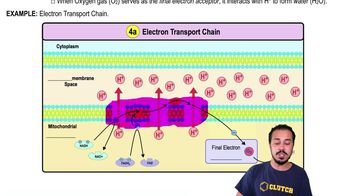
Understand the role of the electron transport chain (ETC) in cellular respiration: The ETC is responsible for creating a proton gradient that drives ATP synthesis and regenerates NAD+ and FAD by transferring electrons to oxygen.
Recognize the impact of cyanide: Cyanide inhibits the ETC by binding to an electron carrier, preventing the transfer of electrons to oxygen, which halts the production of ATP and the regeneration of NAD+ and FAD.
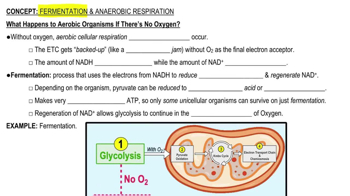
Consider the consequences for glycolysis and the citric acid cycle: Both processes rely on NAD+ and FAD to accept electrons and continue their cycles. Without the regeneration of these molecules, glycolysis and the citric acid cycle cannot proceed.
Analyze the options: Option c, 'They run out of NAD+ and FAD,' aligns with the understanding that the lack of these electron carriers due to ETC inhibition stops glycolysis and the citric acid cycle.
Conclude that the correct explanation is that glycolysis and the citric acid cycle stop because they run out of NAD+ and FAD, which are not regenerated due to the blockage in the electron transport chain.
비슷한 문제에 대한 검증된 영상 답변:
이 영상 해법은 위 문제에 도움이 된다고 튜터들이 추천한 것입니다.
영상 길이:
1m
영상 재생:
0 댓글
주요 개념
질문에 올바르게 답하기 위해 반드시 이해해야 하는 핵심 개념들은 다음과 같습니다.
Electron Transport Chain (ETC)
The electron transport chain is a series of protein complexes located in the inner mitochondrial membrane that facilitate the transfer of electrons derived from NADH and FADH2. This process generates a proton gradient that drives ATP synthesis through oxidative phosphorylation. When cyanide binds to an electron carrier in the ETC, it halts electron flow, disrupting ATP production and affecting the entire cellular respiration process.
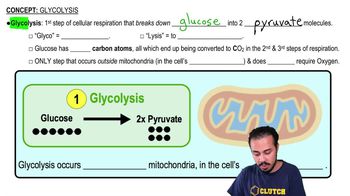
Glycolysis is the initial stage of cellular respiration that breaks down glucose into pyruvate, producing a small amount of ATP and NADH. The citric acid cycle (Krebs cycle) further processes pyruvate to generate additional NADH and FADH2. Both processes rely on the availability of NAD+ and FAD, which are regenerated through the electron transport chain; thus, their activity ceases when the ETC is blocked.
NAD+ and FAD are essential coenzymes in cellular respiration that accept electrons during glycolysis and the citric acid cycle. They are converted to NADH and FADH2, which then donate electrons to the electron transport chain. When the ETC is inhibited, NADH and FADH2 cannot be oxidized back to NAD+ and FAD, leading to a depletion of these coenzymes and ultimately causing glycolysis and the citric acid cycle to stop.