If you were to expose cells that are undergoing aerobic respiration to a radioactive oxygen isotope in the form of O2, which of the following molecules would you expect to be radiolabeled?
a. pyruvate
b. water
c. NADH
d. CO2
검증된 단계별 안내
1
Understand that aerobic respiration involves the consumption of oxygen (O2) and the production of carbon dioxide (CO2) and water (H2O).
Recall that during aerobic respiration, oxygen is the final electron acceptor in the electron transport chain.
Recognize that the oxygen molecule (O2) is used to form water (H2O) at the end of the electron transport chain.
Consider that the radioactive oxygen isotope in O2 would be incorporated into the water molecules produced.
Conclude that the molecule expected to be radiolabeled is water (H2O).
비슷한 문제에 대한 검증된 영상 답변:
이 영상 해법은 위 문제에 도움이 된다고 튜터들이 추천한 것입니다.
영상 길이:
1m
영상 재생:
0 댓글
주요 개념
질문에 올바르게 답하기 위해 반드시 이해해야 하는 핵심 개념들은 다음과 같습니다.
Aerobic Respiration
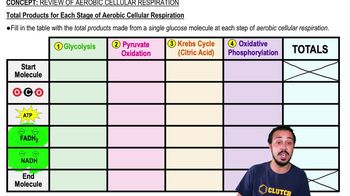
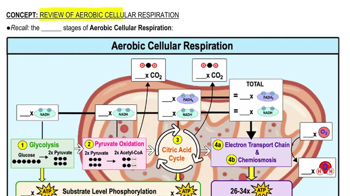
Aerobic respiration is a metabolic process in which cells convert glucose and oxygen into energy, carbon dioxide, and water. This process occurs in several stages, including glycolysis, the Krebs cycle, and the electron transport chain, where oxygen is the final electron acceptor. Understanding this process is crucial for determining how oxygen isotopes are incorporated into cellular molecules.
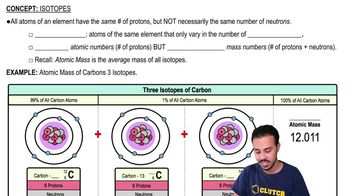
Isotope labeling involves using a variant of an element that has a different number of neutrons, making it detectable through various methods. In this context, a radioactive oxygen isotope (e.g., O-18) can be tracked as it is incorporated into different molecules during metabolic processes. This technique helps identify which molecules are produced or consumed during aerobic respiration.
The main metabolic products of aerobic respiration include carbon dioxide (CO2), water (H2O), and energy-rich molecules like NADH. During the process, oxygen is used to oxidize substrates, leading to the formation of these products. Identifying which of these molecules would be radiolabeled helps in understanding the pathways and transformations occurring during respiration.

 1:27분
1:27분 검증된 단계별 안내
 07:51
07:51