Translation results in the production of .
a. RNA;
b. DNA;
c. protein;
d. individual amino acids;
e. transfer RNA molecules
검증된 단계별 안내
1
Understand the process of translation in the context of protein synthesis.
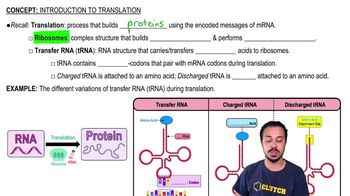
Recall that translation is the process by which ribosomes synthesize proteins using mRNA as a template.
Identify the role of mRNA, which carries the genetic code from DNA to the ribosome.
Recognize that during translation, tRNA molecules bring amino acids to the ribosome, where they are assembled into a polypeptide chain.
Conclude that the end product of translation is a protein, as amino acids are linked together to form a polypeptide chain.
비슷한 문제에 대한 검증된 영상 답변:
이 영상 해법은 위 문제에 도움이 된다고 튜터들이 추천한 것입니다.
영상 길이:
2m
영상 재생:
0 댓글
주요 개념
질문에 올바르게 답하기 위해 반드시 이해해야 하는 핵심 개념들은 다음과 같습니다.
Translation
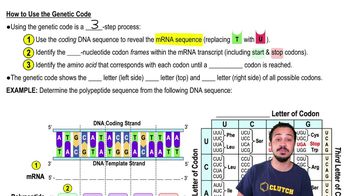
Translation is the biological process in which ribosomes synthesize proteins using messenger RNA (mRNA) as a template. During this process, the sequence of nucleotides in mRNA is decoded to produce a specific sequence of amino acids, which then fold into functional proteins. This is a crucial step in gene expression and occurs in the cytoplasm of cells.
Messenger RNA (mRNA) serves as the intermediary between DNA and protein synthesis. It is transcribed from DNA and carries the genetic information required for the synthesis of proteins. The mRNA sequence is read in sets of three nucleotides, known as codons, each of which corresponds to a specific amino acid during translation.
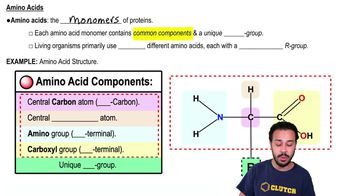
Amino acids are the building blocks of proteins, and they link together in specific sequences to form polypeptides. The order of amino acids in a protein determines its structure and function. Proteins play vital roles in the body, including catalyzing biochemical reactions, providing structural support, and regulating cellular processes.

 2:08분
2:08분 검증된 단계별 안내
 06:12
06:12