Water .
a. is a good solute;
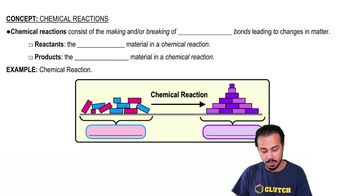
b. facilitates chemical reactions;
c. serves as an enzyme;
d. makes strong covalent bonds with other molecules;
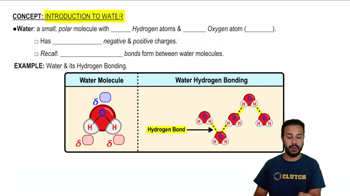
e. consists of two oxygen and one hydrogen atoms
검증된 단계별 안내
1
Step 1: Identify the properties of water relevant to the options provided.
Step 2: Analyze each option to determine if it accurately describes a property of water.
Step 3: Consider the chemical structure of water, which is H2O, consisting of two hydrogen atoms and one oxygen atom.
Step 4: Evaluate the role of water in chemical reactions, particularly its ability to act as a solvent and facilitate reactions.
Step 5: Review the nature of water's interactions with other molecules, focusing on hydrogen bonding rather than covalent bonding.
비슷한 문제에 대한 검증된 영상 답변:
이 영상 해법은 위 문제에 도움이 된다고 튜터들이 추천한 것입니다.
영상 길이:
1m
영상 재생:
0 댓글
주요 개념
질문에 올바르게 답하기 위해 반드시 이해해야 하는 핵심 개념들은 다음과 같습니다.
Properties of Water
Water is often referred to as a 'universal solvent' due to its ability to dissolve many substances, which is crucial for biological processes. Its polar nature allows it to interact with various ions and molecules, facilitating chemical reactions essential for life.
Water plays a vital role in biochemical reactions, acting as a medium where reactants can collide and interact. It participates in hydrolysis and dehydration synthesis reactions, which are fundamental for metabolism and the formation of macromolecules.
The molecular structure of water consists of two hydrogen atoms covalently bonded to one oxygen atom, forming a bent shape. This unique arrangement contributes to its polar characteristics, leading to hydrogen bonding, which is responsible for many of water's exceptional properties, such as high surface tension and specific heat capacity.

 1:15분
1:15분 검증된 단계별 안내
 04:07
04:07