In which cell would you find the most lysosomes?
a,. pancreatic cell that secretes digestive enzymes
b. ovarian cell that produces estrogen (a steroid hormone)
c. muscle cell in the thigh of a long-distance runner
d. white blood cell that engulfs bacteria
검증된 단계별 안내
1
Understand the function of lysosomes: Lysosomes are organelles that contain digestive enzymes and are involved in breaking down waste materials and cellular debris.
Consider the role of each cell type: Analyze the primary function of each cell type listed in the options.
Option a: Pancreatic cells secrete digestive enzymes, which are proteins, but they do not primarily rely on lysosomes for their function.
Option b: Ovarian cells produce steroid hormones, which involves the smooth endoplasmic reticulum more than lysosomes.
Option d: White blood cells, particularly phagocytes, engulf and digest bacteria, requiring a high number of lysosomes to break down the engulfed material.
비슷한 문제에 대한 검증된 영상 답변:
이 영상 해법은 위 문제에 도움이 된다고 튜터들이 추천한 것입니다.
영상 길이:
1m
영상 재생:
0 댓글
주요 개념
질문에 올바르게 답하기 위해 반드시 이해해야 하는 핵심 개념들은 다음과 같습니다.
Lysosomes
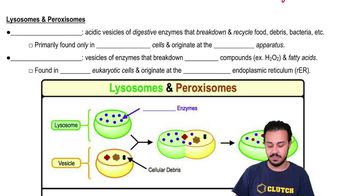
Lysosomes are membrane-bound organelles that contain digestive enzymes responsible for breaking down waste materials and cellular debris. They play a crucial role in cellular metabolism and the recycling of cellular components. Cells that are highly active in digestion or waste processing typically have a higher number of lysosomes.
Different cell types have specialized functions that dictate their organelle composition. For instance, pancreatic cells are involved in producing digestive enzymes, which requires a significant number of lysosomes for processing and recycling these enzymes. Understanding the specific roles of various cell types helps in predicting their lysosomal content.
White blood cells, particularly phagocytes, are integral to the immune response, as they engulf and digest pathogens. This process necessitates a high concentration of lysosomes to break down the engulfed material. Therefore, white blood cells are often rich in lysosomes to support their function in defending the body against infections.

 1:57분
1:57분 검증된 단계별 안내
 05:38
05:38