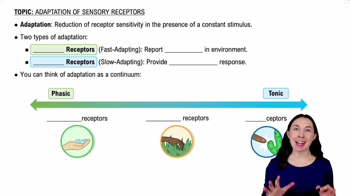
Sensory adaptation is the reduction in receptor sensitivity in the presence of a constant stimulus, helping conserve energy and maintain neural health.
What is an example of sensory adaptation?
Not noticing the smell of a room after being in it for a while
What is a false statement about sensory adaptation?
It increases receptor sensitivity over time
What are phasic receptors?
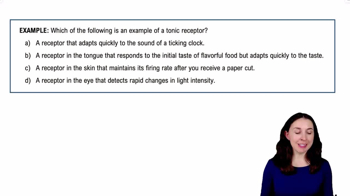
Phasic receptors are fast adapting receptors that quickly respond to initial changes in stimuli but reduce their firing rate when the stimulus remains constant.
What are tonic receptors?
Tonic receptors are slow adapting receptors that continue to fire and respond even when the stimulus is constant, providing a sustained response.
How do thermoreceptors behave in terms of adaptation?
Thermoreceptors primarily act as phasic receptors, responding quickly to changes in temperature but slowing their firing rate when the temperature is constant.
Why are nociceptors considered tonic receptors?
Nociceptors are considered tonic receptors because they provide a sustained response to pain, which is crucial for alerting us to potential harm.
What role do proprioceptors play in the body?
Proprioceptors provide constant information about the location of muscles and joints, helping us navigate and maintain posture.
How do mechanoreceptors vary in their adaptation properties?
Mechanoreceptors can exhibit both phasic and tonic properties, with some responding quickly to changes and others providing sustained information about pressure.
Why is adaptation important for neural health?
Adaptation is important for neural health because it prevents neurons from constantly firing, conserving energy and metabolic resources.
 뒤로
뒤로

 1:17
1:17