뒤로

DNA Repair quiz

컨트롤 버튼이 '내비게이션' 모드로 변경되었습니다.
1/10
  • How are thymine dimers repaired?

    Thymine dimers are repaired by specific DNA repair enzymes that recognize and correct these errors to prevent mutations.
  • What is the error rate of DNA replication before proofreading by DNA polymerases?

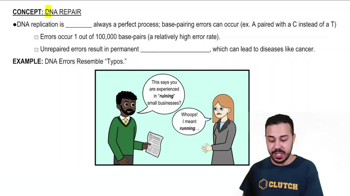
    The error rate of DNA replication before proofreading is 1 error per 100,000 base pairs.
  • How does the proofreading ability of DNA polymerases affect the error rate?

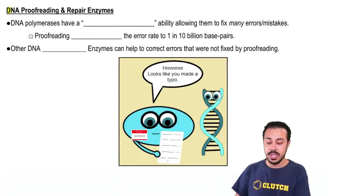
    The proofreading ability of DNA polymerases reduces the error rate from 1 in 100,000 to 1 in 10,000,000,000 base pairs.
  • What can unrepaired errors in DNA lead to?

    Unrepaired errors in DNA can lead to permanent mutations, which may result in diseases like cancer.
  • What role do DNA repair enzymes play in DNA replication?

    DNA repair enzymes work alongside DNA polymerase proofreading to correct errors not initially fixed, enhancing replication accuracy.
  • What analogy is used to describe mutations in DNA?

    Mutations in DNA are likened to typos in a resume, affecting the final product encoded by the DNA.
  • Why is the initial error rate of DNA replication considered relatively high?

    The initial error rate is considered high because DNA replication occurs frequently and involves a large amount of DNA.
  • What is the purpose of DNA proofreading during replication?

    DNA proofreading aims to find and fix errors or mistakes that occur during DNA replication.
  • How do DNA repair enzymes complement the proofreading ability of DNA polymerases?

    DNA repair enzymes help correct errors that may not have been fixed by the proofreading ability of DNA polymerases.
  • What is the significance of reducing the error rate in DNA replication?

    Reducing the error rate in DNA replication makes mutations due to replication errors much less likely.