Skip to main content
Anatomy & Physiology
나의 코스
배우기
시험 준비
AI 튜터
학습 가이드
교과서적 해결책
플래시카드
탐험해 보세요
앱을 사용해 보세요
나의 코스
배우기
시험 준비
AI 튜터
학습 가이드
교과서적 해결책
플래시카드
탐험해 보세요
앱을 사용해 보세요
뒤로
Introduction to Lung Physiology definitions
7 학생들은 이 점이 도움이 되었다고 느꼈습니다
카드를 뒤집기 위해 탭할 수 있습니다.
Ventilation
카드를 뒤집기 위해 탭할 수 있습니다.
👆
Ventilation
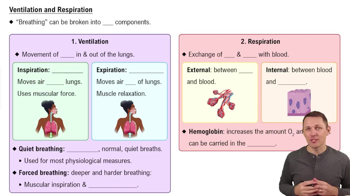
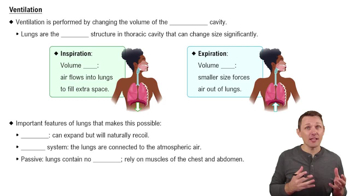
The process of moving air in and out of the lungs by changing the thoracic cavity volume.
진행 상황 추적
컨트롤 버튼이 '내비게이션' 모드로 변경되었습니다.
1/15
관련 플래시카드
관련 실천
추천 영상
Introduction to Lung Physiology quiz #1
Introduction to Lung Physiology
40 용어
Introduction to Lung Physiology quiz #2
Introduction to Lung Physiology
39 용어
Introduction to Lung Physiology quiz #3
Introduction to Lung Physiology
39 용어
Introduction to Lung Physiology
22. The Respiratory System
5 문제점
주제
Pressure in the Lungs and Pleural Cavity
22. The Respiratory System
4 문제점
주제
Jason
22. The Respiratory System - Part 1 of 2
5 주제
9 문제점
장
Bruce
22. The Respiratory System - Part 2 of 2
1 주제
2 문제점
장
4:28
Ventilation
7550
views
183
rank
1
comments
5:55
Ventilation and Respiration
11265
views
338
rank
1
comments
1:37
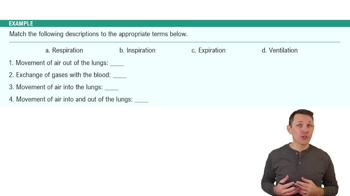
Introduction to Lung Physiology Example 1
7602
views
209
rank
1
comments
이 집합의 용어 (15)
하이드의 정의
Ventilation
The process of moving air in and out of the lungs by changing the thoracic cavity volume.
Respiration
The exchange of gases, specifically oxygen and carbon dioxide, between blood and tissues.
Inspiration
The act of inhaling air into the lungs, primarily using the diaphragm muscle.
Expiration
The act of exhaling air out of the lungs, typically involving muscular relaxation.
Eupnea
Normal, restful breathing that occurs without conscious effort.
Forced Breathing
Deeper, more strenuous breathing using additional muscles for both inhalation and exhalation.
External Respiration
Gas exchange between air in the alveoli and blood, involving oxygen and carbon dioxide.
Internal Respiration
Gas exchange between blood and body tissues, delivering oxygen and removing carbon dioxide.
Cellular Respiration
The metabolic process of breaking down molecules like sugar to produce ATP and carbon dioxide.
Diaphragm
The primary muscle of respiration that contracts to increase thoracic cavity volume during inhalation.
Thoracic Cavity
The space within the rib cage that changes size to facilitate lung ventilation.
Alveoli
Tiny air sacs in the lungs where external respiration occurs, exchanging gases with the blood.
Hemoglobin
A blood molecule that increases oxygen and carbon dioxide transport capacity.
Elasticity
The property of the lungs that allows them to expand and recoil naturally.
Passive Structures
Refers to the lungs' lack of muscle, relying on external muscles to change size.
 뒤로뒤로
뒤로뒤로
 4:28
4:28