Skip to main content
Anatomy & Physiology
나의 코스
배우기
시험 준비
AI 튜터
학습 가이드
교과서적 해결책
플래시카드
탐험해 보세요
앱을 사용해 보세요
나의 코스
배우기
시험 준비
AI 튜터
학습 가이드
교과서적 해결책
플래시카드
탐험해 보세요
앱을 사용해 보세요
뒤로
Introduction to Muscles and Muscle Tissue definitions
5 학생들은 이 점이 도움이 되었다고 느꼈습니다
카드를 뒤집기 위해 탭할 수 있습니다.
Contractility
카드를 뒤집기 위해 탭할 수 있습니다.
👆
Contractility
The ability of muscle tissue to shorten forcibly, generating movement.
진행 상황 추적
컨트롤 버튼이 '내비게이션' 모드로 변경되었습니다.
1/15
관련 플래시카드
관련 실천
추천 영상
Introduction to Muscles and Muscle Tissue quiz #1
Introduction to Muscles and Muscle Tissue
39 용어
Introduction to Muscles and Muscle Tissue quiz #2
Introduction to Muscles and Muscle Tissue
37 용어
Introduction to Muscles and Muscle Tissue quiz #3
Introduction to Muscles and Muscle Tissue
40 용어
Introduction to Muscles and Muscle Tissue
9. Muscle Tissue
7 문제점
주제
Bruce
Structure of a Skeletal Muscle
9. Muscle Tissue
7 문제점
주제
Jason
9. Muscle Tissue
4 주제
11 문제점
장
Jason
6:31
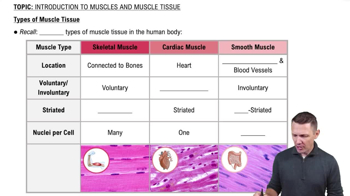
Types of Muscle Tissue
16344
views
441
rank
1
comments
2:00
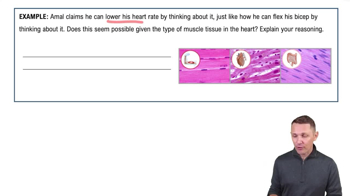
Introduction to Muscles and Muscle Tissue Example 1
14338
views
286
rank
4:36
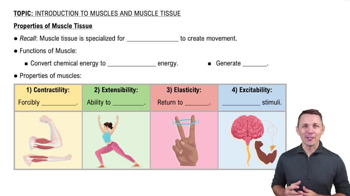
Properties of Muscle Tissue
22539
views
643
rank
2
comments
이 집합의 용어 (15)
하이드의 정의
Contractility
The ability of muscle tissue to shorten forcibly, generating movement.
Extensibility
The capacity of muscle tissue to be stretched without damage.
Elasticity
The property of muscle tissue to return to its original shape after contraction or extension.
Excitability
The ability of muscle tissue to respond to stimuli, often through action potentials.
Skeletal Muscle
Voluntary, striated muscle tissue attached to bones, responsible for body movement.
Cardiac Muscle
Involuntary, striated muscle found in the heart, characterized by a branching pattern.
Smooth Muscle
Involuntary, non-striated muscle found in hollow organs, controlling movement within them.
Striations
Crosswise stripes in muscle tissue indicating organized protein structures.
Intercalated Discs
Structures in cardiac muscle linking cells, facilitating synchronized contraction.
ATP
The primary energy carrier in cells, used by muscles to convert chemical energy into movement.
Nuclei
Cellular structures containing genetic material; skeletal muscle cells have multiple due to their size.
Voluntary Muscle
Muscle that can be consciously controlled, such as skeletal muscle.
Involuntary Muscle
Muscle that operates without conscious control, like cardiac and smooth muscle.
Mechanical Energy
Energy associated with the movement and position of an object, produced by muscle contraction.
Homeostasis
The body's ability to maintain stable internal conditions, aided by muscle-generated heat.
 뒤로뒤로
뒤로뒤로

 6:31
6:31